How To Be Invisible by Tim Lott
Strato Nyman suffers from a bad case of shyness. Couple that with the fact that he a complete science geek and if that wasn't enough of a bully target, he's the only black kid in Hedgecombe. It's only at home that Strato blends into the background, mostly because his parents are too busy arguing to notice him. Then Strato comes across and old dusty bookstore and comes home with a book that suggests that it can make a person turn invisible. The ever logical and scientific minded Strato doesn't believe it until it actually happens to him. With this new found ability Strato sets out to discover the secrets his parents are hiding, why Lloyd Archibald Turnbull is gunning for him, why the bus driver is so weird, and why his Physics professor is so mean.
Currently only released as an audio book in the US, this novel is a fabulous mash-up of fantasy, real-life drama, adventure, and romance. Strato admits he is an unimaginative kid whose obsession with physics is littered throughout the novel. Everything is a science experiment and even when he turns invisible he approaches the situation as any good scientist would, through observation and testing. Strato is a good kid. He wants his parents to stay together, he can't help how shy he is, and he is desperate to get the school bully off his back.
There were a lot of things I loved about this book. First and foremost, the presence of a minority character was a huge plus. This wasn't an urban novel or historical fiction and frankly, there are so few books with black characters who aren't part of a civil rights movement, that it almost feels like a foreign concept. I also loved the presence of a different kind family unit. Strato's parents (who he calls by their first names for reasons that only happen in fiction) are not married. They love each other and live together but for some reason Strato's father has really dragged his feet with the whole marriage thing. Even so, when his parents' relationship begins to unravel, Strato is just as concerned as any child and divorce is just as real a word whether they are married or not.
The bully of the story felt a little shallow. Child suffers from a cruel abusive mother and a crippled limb, and thus takes his anger out on other people, like Strato. All Strato has to do is pretend to be a ghost and everything changes. I do believe there are children out their who are taking their pain out on others, but I also think there are also people who, despite having loving parents, can be mean and cruel. In other words, bullying is much more complex than this.
How To Be Invisible has a lot of heart, is somewhat didactic, but I was always rooting for Strato and was sure that no matter what happened, he was going to be all right, visible or invisible.
How To Be Invisible by Tim Lott Book Review
Posted by
Unknown
on Thursday, June 27, 2013
Labels:
Young Adult Review
/
Comments: (0)
Impulse by Steven Gould Book Review
Posted by
Unknown
on Monday, June 24, 2013
Labels:
Young Adult Review
/
Comments: (0)
Impulse by Steven Gould
Cent lives an entirely unsocial life. Not surprising seeing as her parents are both on the run from both the government and terrorists for her entire sixteen years of life. Cent has grown up in a cabin in the Yukon, the nearest town being over 100 miles away. But they aren't cut off. Millie and David both have the ability to teleport, or "jump", and it is with this ability that they aid in relief work, go shopping in Paris, visit Australia in the middle of the night, get ice cream in New York City, and they can do so in the blink of an eye. Cent was not born with this ability, but when she is caught in an avalanche, she finds that a life threatening situation is just the jump start she needed to develop of new ability. And what does she do with such an ability? Cent wants to go to school. For the first time, the willful and too much like her parents Cent, will be with kids her own age. Soon though, Cent is the focus of the school bully and a simple schoolyard disagreement becomes a whole lot more than she bargained for. Meanwhile, Cent's parents must track down an old enemy who is bent on controlling all jumpers.
Written in 1992, Jumper was the first book in what has now become a trilogy, although the first book could definitely be considered a stand-alone novel. Unlike the travesty of a film that was made, Jumper really caught my imagination as a teenager. I appreciate its depth and complexities and especially love that even though it is about a young man who can teleport, it isn't a book about teleportation. The sequel, Reflex, published in 2004, has David kidnapped and subsequently tortured and his wife Millie develops the ability to "jump". Now this third novel is set 17 years after Reflex, and in the hands of Cent, jumping is a whole new world.
I have always debated whether Jumper would be considered young adult. Although I read it as a teenager and it was reprinted with a more YA friendly cover in 1995, there are definitely some elements such as rape, terrorism, murder, alcoholism, and abuse that can feel rather adult. The second book goes easier on these subjects, but the characters have aged beyond their teens and are very adult. Impulse however, is entirely a teen novel. Although there are chapters with Millie and David narrating, it is Cent's story. She drives the plot forward with the rush of excitement that only a teenager can have.
Cent is incredibly smart, strong-willed, and despite her good relationship with her parents, she is feeling smothered by their protectiveness. Of course, they do have good reason to be protective, her father only has to pull down his shirt to show her the scars, but even so, Cent feels that it is high time she go to school and be allowed to make friends with people her own age. Cent also discovers a new way to jump, adding speed and velocity when she jumps so that she can fly through the air. I loved that new element as it gave Cent ownership over her jumping.
I loved the family dynamics in this story. The parents are not absent as in a lot of YA fiction, and their characters added to the story. Cent is brilliant and sassy, and although she claims to be unsocialized, she is quick to catch on and make friends....and enemies. The romance of the story (for you know there is one) was nice and organic in a way that made it believable. Oh, and she snowboards. The details about snowboarding sometimes left me reeling with all the technical terms, but it only added to the authenticity rather than create any confusion or boredom.
Cent is a fabulous heroine and here is the best part...you don't have to read the other two books in order to Impulse. There are plenty of inferences of the last two books to understand their basic plots without unnecessary info dumps. Although, I do think you should Jumper, simply because it is awesome.
Cent lives an entirely unsocial life. Not surprising seeing as her parents are both on the run from both the government and terrorists for her entire sixteen years of life. Cent has grown up in a cabin in the Yukon, the nearest town being over 100 miles away. But they aren't cut off. Millie and David both have the ability to teleport, or "jump", and it is with this ability that they aid in relief work, go shopping in Paris, visit Australia in the middle of the night, get ice cream in New York City, and they can do so in the blink of an eye. Cent was not born with this ability, but when she is caught in an avalanche, she finds that a life threatening situation is just the jump start she needed to develop of new ability. And what does she do with such an ability? Cent wants to go to school. For the first time, the willful and too much like her parents Cent, will be with kids her own age. Soon though, Cent is the focus of the school bully and a simple schoolyard disagreement becomes a whole lot more than she bargained for. Meanwhile, Cent's parents must track down an old enemy who is bent on controlling all jumpers.
Written in 1992, Jumper was the first book in what has now become a trilogy, although the first book could definitely be considered a stand-alone novel. Unlike the travesty of a film that was made, Jumper really caught my imagination as a teenager. I appreciate its depth and complexities and especially love that even though it is about a young man who can teleport, it isn't a book about teleportation. The sequel, Reflex, published in 2004, has David kidnapped and subsequently tortured and his wife Millie develops the ability to "jump". Now this third novel is set 17 years after Reflex, and in the hands of Cent, jumping is a whole new world.
I have always debated whether Jumper would be considered young adult. Although I read it as a teenager and it was reprinted with a more YA friendly cover in 1995, there are definitely some elements such as rape, terrorism, murder, alcoholism, and abuse that can feel rather adult. The second book goes easier on these subjects, but the characters have aged beyond their teens and are very adult. Impulse however, is entirely a teen novel. Although there are chapters with Millie and David narrating, it is Cent's story. She drives the plot forward with the rush of excitement that only a teenager can have.
Cent is incredibly smart, strong-willed, and despite her good relationship with her parents, she is feeling smothered by their protectiveness. Of course, they do have good reason to be protective, her father only has to pull down his shirt to show her the scars, but even so, Cent feels that it is high time she go to school and be allowed to make friends with people her own age. Cent also discovers a new way to jump, adding speed and velocity when she jumps so that she can fly through the air. I loved that new element as it gave Cent ownership over her jumping.
I loved the family dynamics in this story. The parents are not absent as in a lot of YA fiction, and their characters added to the story. Cent is brilliant and sassy, and although she claims to be unsocialized, she is quick to catch on and make friends....and enemies. The romance of the story (for you know there is one) was nice and organic in a way that made it believable. Oh, and she snowboards. The details about snowboarding sometimes left me reeling with all the technical terms, but it only added to the authenticity rather than create any confusion or boredom.
Cent is a fabulous heroine and here is the best part...you don't have to read the other two books in order to Impulse. There are plenty of inferences of the last two books to understand their basic plots without unnecessary info dumps. Although, I do think you should Jumper, simply because it is awesome.
::sigh:: I just love great books, don't you?
The Rithmatist by Brandon Sanderson Book Review
Posted by
Unknown
on Saturday, June 22, 2013
Labels:
Young Adult Review
/
Comments: (0)
The Rithmatist by Brandon Sanderson
Okay...see if you can follow me on this one.
Joel wants to be a Rithmatist. Chosen at the age of eight by the Master in a mysterious ceremony, Rithmatists have the power to breath life into chalk drawings. Rithmatists are warriors and scholars and are humanity's only defense against the Wild Chalklings who threaten to overrun all the American Isles. Joel missed his chance to become a Rithmatist and so he pines for the one thing he is not. At school, Joel sneaks into classes he shouldn't, searching for any answers to the mysterious world he can never be a part of. Then students start to go missing, leaving behind signs that they were attacked by thousands of wild chalklings. Assigned to help the professor who is investigating the crimes, Joel and his friend Melody find themselves on the trail of an unexpected discovery — one that will change Rithmatics — and their world — forever.
A mixture of parallel universe, steampunk, mystery, and fantasy, this book is all the reasons why I love Brandon Sanderson and fantasy in general. How creative. How original. How fun.
Sanderson creates a world that is just barely recognizable as our own. The Americas at the turn of the century but for some reason in this universe, it is a series of islands and they are not united. They have strange names like Nebrask, Texahoma, and West Carolina. (don't worry there are illustrations and maps to help you as you read) Europe was taken over by the Chinese centuries before and they kicked out all the Scottish for some reason. Due to the Wild Chalklings there are not Native Americans, only their warnings have been left behind. The Dark Ages appear to be a blip due to the discovery of Rithmatism. Christianity and the church is different for it is believed that God is the one who grants power to the Rithmatists, a power that cannot be refuted and thus God is not refuted.
Joel is smart and desperate, wanting the one thing he can never have, which I think many readers will be able to relate to. An outcast, Joel is troubled when he begins making friends with Melody, a Rithmatist student who absolutely hates her birthright. There is a hint of mystery surrounding Melody too (one that will hopefully be answered in the books to come). How can Melody come from a family with six Rithmatists? Isn't it supposed to be random? All the studies show that bloodlines do not matter...right?
This is a world that you get sucked into and there are so many little things that would simply not make sense if I mentioned them in this review, but as you go deeper and deeper into the story, things like chalk line theory and chalklings and new chalk lines and duels all begin to make sense.
I am so terribly excited about this book because I find it so original and engrossing and it is books like this that remind me why I love this genre so much.
Okay...see if you can follow me on this one.
Joel wants to be a Rithmatist. Chosen at the age of eight by the Master in a mysterious ceremony, Rithmatists have the power to breath life into chalk drawings. Rithmatists are warriors and scholars and are humanity's only defense against the Wild Chalklings who threaten to overrun all the American Isles. Joel missed his chance to become a Rithmatist and so he pines for the one thing he is not. At school, Joel sneaks into classes he shouldn't, searching for any answers to the mysterious world he can never be a part of. Then students start to go missing, leaving behind signs that they were attacked by thousands of wild chalklings. Assigned to help the professor who is investigating the crimes, Joel and his friend Melody find themselves on the trail of an unexpected discovery — one that will change Rithmatics — and their world — forever.
A mixture of parallel universe, steampunk, mystery, and fantasy, this book is all the reasons why I love Brandon Sanderson and fantasy in general. How creative. How original. How fun.
Sanderson creates a world that is just barely recognizable as our own. The Americas at the turn of the century but for some reason in this universe, it is a series of islands and they are not united. They have strange names like Nebrask, Texahoma, and West Carolina. (don't worry there are illustrations and maps to help you as you read) Europe was taken over by the Chinese centuries before and they kicked out all the Scottish for some reason. Due to the Wild Chalklings there are not Native Americans, only their warnings have been left behind. The Dark Ages appear to be a blip due to the discovery of Rithmatism. Christianity and the church is different for it is believed that God is the one who grants power to the Rithmatists, a power that cannot be refuted and thus God is not refuted.
Joel is smart and desperate, wanting the one thing he can never have, which I think many readers will be able to relate to. An outcast, Joel is troubled when he begins making friends with Melody, a Rithmatist student who absolutely hates her birthright. There is a hint of mystery surrounding Melody too (one that will hopefully be answered in the books to come). How can Melody come from a family with six Rithmatists? Isn't it supposed to be random? All the studies show that bloodlines do not matter...right?
This is a world that you get sucked into and there are so many little things that would simply not make sense if I mentioned them in this review, but as you go deeper and deeper into the story, things like chalk line theory and chalklings and new chalk lines and duels all begin to make sense.
I am so terribly excited about this book because I find it so original and engrossing and it is books like this that remind me why I love this genre so much.
Below by Meg McKinlay Book Review
Posted by
Unknown
on Wednesday, June 19, 2013
Labels:
intermediate book review
/
Comments: (0)
Below by Meg McKinlay
On the day Cassie was born, Old Lower Grange was buried five thousand swimming pools' worth of water. Twelve years later, Cassie is still haunted by that day, by the town she never knew. Everyone seems to have a story about the old town, the old house, their old life, and Cassie feels left out. As the summer progresses, Cassie finds herself drawn to the lake and its mysteries. And as a drought grips their town, pieces of Old Lower Grange begin to emerge from the water. With the help of Liam, a boy whose life was also changed on that fateful day twelve years ago, they begin to realize that not even a lake can hide its secrets.
Haunting and tightly woven, Below felt original and authentic. The characters were interesting in a way that only two twelve-year-old can be and their hunt for something that was lost to them was something that I could relate to, although my obsessions were slightly different. The image of this town, 200 feet below the surface and the children swimming the streets from above was absolutely beautiful and terrible. It reminded me of a documentary I once watched about Dana, Massachusetts in which the town was put underwater to make room for a resevoir. Once a year, the residents of the town have been allowed back in to reminisce, share some food, and mourn the loos of their town. There aren't many left who remember. Cassie refuses to allow her town to stay buried.
The plot driving element is of course the mystery. The town's mayor is clearly worried about the water's low levels, but his concern seems to be more than just drought worry. What is he hiding? Cassie thinks she may know.
I loved this little book. It reminded me a lot of Homesick, quite, dark, but also beautiful and hopeful. A definite plus for any bookshelf.
On the day Cassie was born, Old Lower Grange was buried five thousand swimming pools' worth of water. Twelve years later, Cassie is still haunted by that day, by the town she never knew. Everyone seems to have a story about the old town, the old house, their old life, and Cassie feels left out. As the summer progresses, Cassie finds herself drawn to the lake and its mysteries. And as a drought grips their town, pieces of Old Lower Grange begin to emerge from the water. With the help of Liam, a boy whose life was also changed on that fateful day twelve years ago, they begin to realize that not even a lake can hide its secrets.
Haunting and tightly woven, Below felt original and authentic. The characters were interesting in a way that only two twelve-year-old can be and their hunt for something that was lost to them was something that I could relate to, although my obsessions were slightly different. The image of this town, 200 feet below the surface and the children swimming the streets from above was absolutely beautiful and terrible. It reminded me of a documentary I once watched about Dana, Massachusetts in which the town was put underwater to make room for a resevoir. Once a year, the residents of the town have been allowed back in to reminisce, share some food, and mourn the loos of their town. There aren't many left who remember. Cassie refuses to allow her town to stay buried.
The plot driving element is of course the mystery. The town's mayor is clearly worried about the water's low levels, but his concern seems to be more than just drought worry. What is he hiding? Cassie thinks she may know.
I loved this little book. It reminded me a lot of Homesick, quite, dark, but also beautiful and hopeful. A definite plus for any bookshelf.
Viva Jacquelina! by L.A. Meyer Book Review
Posted by
Unknown
on Monday, June 17, 2013
Labels:
Young Adult Review
/
Comments: (1)
Viva Jacquelina! Being an Account of the Further Adventures of Jacky Faber, Over the Hills and Far Away by L.A. Meyer
In the tenth installment of the Bloody Jack series, we find Miss Jacky Faber once again under the thumb of British Intelligence. Sent to Spain as a spy, Jacky soon finds herself in her usual mess in the company of guerrilla freedom fighters, eating hallucinatory mushrooms, posing nude for the famous artist Goya, running with the bulls, being kidnapped by the Spanish Inquisition, and traveling with a caravan of gypsies.
It is difficult to believe that this is the tenth installment in the tales of Jacky Faber. Perhaps this is because I have chosen to believe that Mississippi Jack didn't happen or simply because I enjoy this series so much. Jacky is vivacious and intense, flirty yet reliable, strong-willed and grand. She captures the imaginations of everyone she meets and produces in them a fierce love and loyalty. Yet, sometimes she can be a bit too much. When is she ever going to be with Jaimy? Perhaps she should just give up and move on, after all there are plenty of young men who have shown a great interest in her, and she does seem to have more opportunities to see Lord Richard Allen. (who I like better than Jaimy by the way)
This installment in the Jacky series felt sort of gimmicky and although Jacky was as true to herself as always, it did little in the way of moving the overall plot forward. It just felt like a chance to put Jacky in Spain where she could meet a famous person or two (as she does) and then run with the bulls, which any good street urchin would do of course. Jacky becoming a painter's model was a rather lucky break. Also, a chance for Jacky to be part of history once again for she poses for a rather famous portrait. (See picture below: we are supposed to believe that this is Jacky in a dark wig. I chose the image of the Maja clothed)
I don't know. I do so love Jacky, but the series is starting to feel rather drawn out and disconnected and her adventures, which have always been rather ridiculous, are beginning to feel completely contrived. Whatever happens, I will keep reading and smiling and hoping one day Jacky manages to settle down, and not at the end of a hangman's noose.
One Plus One Equals Blue by M.J. Auch Book Review
Posted by
Unknown
on Saturday, June 15, 2013
Labels:
Young Adult Review
/
Comments: (0)
One Plus One Equals Blue by M.J. Auch
Twelve-year old Basil has a secret, one that he has never shared with anyone, not even his well-meaning grandmother. Whenever Basil sees a number he associates that number with a color. After being homeschooled since he was small, Basil finds school to be a lonely place, until he meets Tenzie. Tenzie is annoying and overly talkative, but she too has synesthesia and Basil finds himself drawn to someone like himself. When Basil's estranged mother returns, she throws everything into chaos and Basil is forced to find truth and happiness, just like colors, are not always black and white.
This book truly felt like two different books. The first half, dealing with Basil, his grandmother, and Tenzie read like a very nice book about friendship and understanding. Tenzie is a latch-key child whose parents always seem to be away. She immediately begins calling Basil's grandmother Grams, which annoys Basil and begins inserting herself into his life. She sits with him at lunch even though he does not want her to, stands up to bullys for him, and takes over the special times he used to share with his grandmother. The synesthesia is an interesting element to the story, but takes a back seat to the plot, which is important whenever presenting any kind of disorder or disability into a book. And then....
Then Basil's mother shows up and this becomes a completely different book in tone and plot. Quickly, the story shifts into love, forgiveness, righting wrongs, finding the truth, and understanding ones place in the world. The second story was admittedly far more interesting to me, but rather jarring in comparison to the first half of the book. Basil's mother, Carly, is a wholly selfish woman, whose primary concern is for herself. Her inability to care for or even show love to her son is heart-wrenching, made even more so by Tenzie's absolute desire to escape her own life and become an actress like Carly. (a failed actress I should add)
I waffled back and forth as to whether I liked this book. One the one hand there are the typical stereotypes and tropes. Homeschooled kid doesn't know how to make friends and is a loner. As a former homeschooler, I absolutely hate this image. Not that these kids don't exist, but this seems to be the only image of homeschoolers I see in fiction. Basil complains about the children in the neighborhood beside his, never coming outside to play, yet it doesn't appear that he ever did either, because even suburban kids do go outside sometimes, crazy as that sounds.
Carly is your atypical neglectful mother. As far as I could tell, she has absolutely no love or compassion for Basil, even reaching the point where she would abandon he and Tenzie with no money. This made her flat and a terrible villain and an unforgivable character in my book. I am not saying mothers like this do not exist, but it sure made it easy to hate her, which seemed to be the only reason she was around.
On the other hand, Basil's search for the truth and for Carly's affection was engaging and honestly, if the whole book had been like the first half, I probably would have stopped reading. So I think I am going to middle of the road with this one. It was a 2.5 out of 5 stars for me. As for the disability...this was interesting element, but didn't add or take away anything from the story, and yet whenever I think about it, it will always be that book about colors. I am still unsure as to whether that is a good or a bad thing.
Twelve-year old Basil has a secret, one that he has never shared with anyone, not even his well-meaning grandmother. Whenever Basil sees a number he associates that number with a color. After being homeschooled since he was small, Basil finds school to be a lonely place, until he meets Tenzie. Tenzie is annoying and overly talkative, but she too has synesthesia and Basil finds himself drawn to someone like himself. When Basil's estranged mother returns, she throws everything into chaos and Basil is forced to find truth and happiness, just like colors, are not always black and white.
This book truly felt like two different books. The first half, dealing with Basil, his grandmother, and Tenzie read like a very nice book about friendship and understanding. Tenzie is a latch-key child whose parents always seem to be away. She immediately begins calling Basil's grandmother Grams, which annoys Basil and begins inserting herself into his life. She sits with him at lunch even though he does not want her to, stands up to bullys for him, and takes over the special times he used to share with his grandmother. The synesthesia is an interesting element to the story, but takes a back seat to the plot, which is important whenever presenting any kind of disorder or disability into a book. And then....
Then Basil's mother shows up and this becomes a completely different book in tone and plot. Quickly, the story shifts into love, forgiveness, righting wrongs, finding the truth, and understanding ones place in the world. The second story was admittedly far more interesting to me, but rather jarring in comparison to the first half of the book. Basil's mother, Carly, is a wholly selfish woman, whose primary concern is for herself. Her inability to care for or even show love to her son is heart-wrenching, made even more so by Tenzie's absolute desire to escape her own life and become an actress like Carly. (a failed actress I should add)
I waffled back and forth as to whether I liked this book. One the one hand there are the typical stereotypes and tropes. Homeschooled kid doesn't know how to make friends and is a loner. As a former homeschooler, I absolutely hate this image. Not that these kids don't exist, but this seems to be the only image of homeschoolers I see in fiction. Basil complains about the children in the neighborhood beside his, never coming outside to play, yet it doesn't appear that he ever did either, because even suburban kids do go outside sometimes, crazy as that sounds.
Carly is your atypical neglectful mother. As far as I could tell, she has absolutely no love or compassion for Basil, even reaching the point where she would abandon he and Tenzie with no money. This made her flat and a terrible villain and an unforgivable character in my book. I am not saying mothers like this do not exist, but it sure made it easy to hate her, which seemed to be the only reason she was around.
On the other hand, Basil's search for the truth and for Carly's affection was engaging and honestly, if the whole book had been like the first half, I probably would have stopped reading. So I think I am going to middle of the road with this one. It was a 2.5 out of 5 stars for me. As for the disability...this was interesting element, but didn't add or take away anything from the story, and yet whenever I think about it, it will always be that book about colors. I am still unsure as to whether that is a good or a bad thing.
The Tell-Tale Start : The Misadventures of Edgar & Allan Poe by Gordon McAlpine Book Review
Posted by
Unknown
on Thursday, June 13, 2013
Labels:
intermediate book review
/
Comments: (0)
The Tell-Tale Start: The Misadventures of Edgar & Allan Poe by Gordon McAlpine
Edgar and Allan Poe are identical twins and the great-great-great-great-grandnephews of the famous Edgar Allan Poe. Identical is almost every way, it is almost like the two boys are one person, and it is this very concept that drives them into a trap so dark that not even their granduncle in the Great Beyond can stop it.
Although highly predictable, The Misadventures of Edgar & Allan Poe was a wry twist of humor, literary analogies, mystery, and the paranormal. However, I wonder if some of the funny asides relating directly to the renowned author Poe will be lost on young readers. I am not entirely sure when children are assigned to read The Fall of the House of Usher or The Tell-Tale Heart, but without a basic working knowledge of these works the book may be a little over the heads of its readers. That is not to say that they may not enjoy it, like a kids movie that has adult jokes in them, but there are a number of references they just won't get.
Perhaps this one may have to go into the category of 'Book that adults will love more than kids.'
Edgar and Allan Poe are identical twins and the great-great-great-great-grandnephews of the famous Edgar Allan Poe. Identical is almost every way, it is almost like the two boys are one person, and it is this very concept that drives them into a trap so dark that not even their granduncle in the Great Beyond can stop it.
Although highly predictable, The Misadventures of Edgar & Allan Poe was a wry twist of humor, literary analogies, mystery, and the paranormal. However, I wonder if some of the funny asides relating directly to the renowned author Poe will be lost on young readers. I am not entirely sure when children are assigned to read The Fall of the House of Usher or The Tell-Tale Heart, but without a basic working knowledge of these works the book may be a little over the heads of its readers. That is not to say that they may not enjoy it, like a kids movie that has adult jokes in them, but there are a number of references they just won't get.
Perhaps this one may have to go into the category of 'Book that adults will love more than kids.'
Mirror Mirror by Marilyn Singer Book Review
Posted by
Unknown
on Friday, June 7, 2013
Labels:
picture book review
/
Comments: (0)
Mirror Mirror by Marilyn Singer
Initially, it was the illustrations by Josee Masse that made me want to pick up this book, but once in my hands I found myself staring at these poems in fascination. Being a terrible poet myself, I am completely amazed as to how Singer managed to create a vignette of poems, all centered around classic fairy tales, in which the poems structure literally creates two different stories with the exact same words. The thought that must have gone into something like this. Reverse poetry my be my favorite kind of poetry so far, or at the very least it is as good as poetry for two voices.
An exert of the book follows:
Initially, it was the illustrations by Josee Masse that made me want to pick up this book, but once in my hands I found myself staring at these poems in fascination. Being a terrible poet myself, I am completely amazed as to how Singer managed to create a vignette of poems, all centered around classic fairy tales, in which the poems structure literally creates two different stories with the exact same words. The thought that must have gone into something like this. Reverse poetry my be my favorite kind of poetry so far, or at the very least it is as good as poetry for two voices.
An exert of the book follows:
In Reverse
Who
says
it’s true–
down
is
the only view?
If you believe that,
this poem
will challenge
you.
Up
is
something new.
***
Something new
is
up.
You
will challenge
this poem
if you believe that
the only view
is
down.
It’s true.
Says who?
says
it’s true–
down
is
the only view?
If you believe that,
this poem
will challenge
you.
Up
is
something new.
***
Something new
is
up.
You
will challenge
this poem
if you believe that
the only view
is
down.
It’s true.
Says who?
For more of this author: http://marilynsinger.net/
The Navigator: A Study in Character Development
Posted by
Unknown
on Saturday, June 1, 2013
Labels:
essays,
Young Adult Review
/
Comments: (0)
I devour books at an astounding pace. When I feel like I have "slowed down" I often mean that I was only able to get through 4 or 5 books in a month as opposed to my 15-20 that seems to have become my average. When I tell people how many books I read in a month, they usually give me a rather bizarre eye-popping stare followed by a quick exhalation of breath and some statement about not having read anything but blogs (or nothing) for the past month. This is good for me, or at least it would be as long as I keep up the blogging. I know I sound like I am rambling, which most of you aren't used to since I mostly write reviews, but I have felt rather cooped up by my blogging format and have decided that if I am to maintain any sanity in the next few months, my blog may have to reflect my brain, which is currently stuck on characterization.
To be more specific, consistency within characterization. I recently read a fabulous adult sci-fi called Ready Player One. This was everything a sci-fi should be.
Except for the first chapter.
See, the author had a terrific plot involving a virtual reality treasure hunt with the 1980's as a focal point. There were War Games, Dungeons and Dragons, virtual reality wars, Pacman, and a great mystery. For the haters, it basically name drops the 1980's all over the place, which was fine by me. It is one of the better books I have read of late. However, that first chapter was like the author's own personal soapbox and sadly, the character in chapters 2 through whatever was not the same in numero uno. In that first chapter there are a number of character inconsistencies. For example, Wade Watts (our protagonist) is against religion and states that he finds it useless along with its worshippers. However, just a few paragraphs later he tells the reader that one of the nicest and best people he has ever known is a religious women who lives below him. An interesting dichotomy in character that would have been a good jumping off point, but here is the crux, the author never mentions religion again. Not in the entire book. Which leads me to believe that the author has a problem with religion and simply couldn't let his book go without mentioning it, to the detriment of the character since it really has nothing to do with the character or his story.

This is an issue that I have seen in a number of books lately. Shades of Earth, Hunger Games, Insurgent, The Navigator, in a world in which less and less authors and by extension books are being published, one would think that the editors and agents would be quick to point out these major character flaws and authorial intrusions. Something along the lines of:
Dear author, I understand that you don't like organized religion, but it doesn't seem like it matters at all to your character so can we leave that bit out?
Or,
Dear author, it is our understanding that your character is a rather logical person, so why would you make her an emotional wreck in the second installment of your series?
I expect such letters from my beta readers and eventually editors. One such beta reader recently pointed out that my fantasy characters are all rather defeatist, a trait that I had not really noticed until she pointed it out. Reading through it again, I realize that yes, they are, and really only one of them should be such a cynic and not because of a lack of training but because of a lack of trust, which are really completely different things.
As the title may suggest, I read The Navigator and City of Time series and found that the character in book 1 was nothing like the one in book 2 and sadly this was not because the character had changed all that much by the end of the first book. I felt like I was meeting an entirely new character in the second book, one who made choices that seemed more like plot points than actual character development and as a reader that is frustrating. Don't get me wrong, I am okay with the occasional plot driven action adventure, but for the most part, I am a character girl. Give me a good engaging character and I may forgive a slower plot simply because I love the character so much. And as authors, sometimes it is important to remember that not all our characters are like us and sometimes we must step aside in order to let our characters shine through.
To be more specific, consistency within characterization. I recently read a fabulous adult sci-fi called Ready Player One. This was everything a sci-fi should be.
Except for the first chapter.
See, the author had a terrific plot involving a virtual reality treasure hunt with the 1980's as a focal point. There were War Games, Dungeons and Dragons, virtual reality wars, Pacman, and a great mystery. For the haters, it basically name drops the 1980's all over the place, which was fine by me. It is one of the better books I have read of late. However, that first chapter was like the author's own personal soapbox and sadly, the character in chapters 2 through whatever was not the same in numero uno. In that first chapter there are a number of character inconsistencies. For example, Wade Watts (our protagonist) is against religion and states that he finds it useless along with its worshippers. However, just a few paragraphs later he tells the reader that one of the nicest and best people he has ever known is a religious women who lives below him. An interesting dichotomy in character that would have been a good jumping off point, but here is the crux, the author never mentions religion again. Not in the entire book. Which leads me to believe that the author has a problem with religion and simply couldn't let his book go without mentioning it, to the detriment of the character since it really has nothing to do with the character or his story.

This is an issue that I have seen in a number of books lately. Shades of Earth, Hunger Games, Insurgent, The Navigator, in a world in which less and less authors and by extension books are being published, one would think that the editors and agents would be quick to point out these major character flaws and authorial intrusions. Something along the lines of:
Dear author, I understand that you don't like organized religion, but it doesn't seem like it matters at all to your character so can we leave that bit out?
Or,
Dear author, it is our understanding that your character is a rather logical person, so why would you make her an emotional wreck in the second installment of your series?
I expect such letters from my beta readers and eventually editors. One such beta reader recently pointed out that my fantasy characters are all rather defeatist, a trait that I had not really noticed until she pointed it out. Reading through it again, I realize that yes, they are, and really only one of them should be such a cynic and not because of a lack of training but because of a lack of trust, which are really completely different things.
As the title may suggest, I read The Navigator and City of Time series and found that the character in book 1 was nothing like the one in book 2 and sadly this was not because the character had changed all that much by the end of the first book. I felt like I was meeting an entirely new character in the second book, one who made choices that seemed more like plot points than actual character development and as a reader that is frustrating. Don't get me wrong, I am okay with the occasional plot driven action adventure, but for the most part, I am a character girl. Give me a good engaging character and I may forgive a slower plot simply because I love the character so much. And as authors, sometimes it is important to remember that not all our characters are like us and sometimes we must step aside in order to let our characters shine through.
Green with Envy: New Releases from Hamline graduates and others
So I have a confession to make. Obviously, I have been rather lax in my blogging duties as of late. I have a great many excuses that involve being a newlywed and working two jobs and so on, but the truth is, I have been rather tired of late and at the end of a long day, I want to veg in front of the television with a bowl of Cookies & Creme frozen yogurt and a good action flick rather than blog. Occasionally, I get twinges of guilt, but then I convince myself that no one is really reading anyway. Then I get my blog statistics report and am reminded that a couple hundred people visit every week and I am a sorry excuse of a blogger. Hangs head in shame.
A few times now I have been asked to review a book or feature a book or interview an author and I have not done so for various reasons. The first being that I made it a steadfast rule from the beginning to never review the book of a friend or classmate. I have no regrets with this rule other than the fact that you, my readers, never get to hear about some of the amazing books written by my wonderful colleagues. The jealousy part doesn't play a part in any of this other than to make me feel like a terribly lazy writer every time one of them publishes something new. On the one hand I am excited for them and yet on the other...
The real confession is this: I am jealous of my fellow writers.
A few times now I have been asked to review a book or feature a book or interview an author and I have not done so for various reasons. The first being that I made it a steadfast rule from the beginning to never review the book of a friend or classmate. I have no regrets with this rule other than the fact that you, my readers, never get to hear about some of the amazing books written by my wonderful colleagues. The jealousy part doesn't play a part in any of this other than to make me feel like a terribly lazy writer every time one of them publishes something new. On the one hand I am excited for them and yet on the other...
So without further ado, here are some of the most recent books of some of the people that I consider my colleagues and friends that one day I will join the ranks of if I can only pry myself away from the television.
Legend by Marie Lu Book Review
Posted by
Unknown
on Tuesday, April 2, 2013
Labels:
Dystopian SciFi,
Young Adult Review
/
Comments: (0)
Legend by Marie Lu
Day is a wanted criminal. On the run,
Day spends most of his time thinking of schemes to bug the Republic,
while keeping his true identity secret. Never far from his thoughts
though is his family, who struggle under an oppressive regime. When
his youngest brother contracts a new deadly plague, Day desperately
breaks into a hospital in order to find a cure, but instead winds up
with more than he bargained for. Believing her brother to have been
murdered by Day, June chases him down, scenting him out as she has
been taught. Yet, Day is not what she expected and the questions he
asks, about their society and their lives create a world that June is
unsure of.
I have had a fascination with North
Korea for a long time, especially in regards to the people who live
in a continual state of lies and brainwashing. And don't mistake
brainwashing for something as simple as trying to teach children your
own agenda. This is an entire society that literally functions off
lies. From education to God to how the outside world is, this kind of
society exists in a bubble. Having read countless interviews with the
people who leave such a world behind, they often have a very
difficult time adjusting to life outside. In South Korea, North
Koreans are seen as burdensome, often needing government assistance
when it comes to education, employment, health care, and mental
health care. Of course, what would you be like if you discovered that
the president of your country really isn't a god, that your “enemy”
countries are actually friendly, that there are rich and poor, that
you do not have to rat out your neighbor or live in fear, that no one
will send you to a labor camp simply because you did not cry loud
enough at a state funeral.
This is the world of Legend. As with a
few books I have read lately, chiefly You'll Like it Here (Everybody
Does) and Divergent, this is an area of fascination. World's cut off
from society and unaware of the outside world. A world that, from the
reader's point of view, is so obviously unhinged. The difference for
me was that in You'll Like it Here (Everybody Does), the characters
were simply bystanders to this strange place. In Divergent, the
characters were a part, but were too reactionary and did not see a
reason for change, believing their way of life to be perfect.
Legend's characters were instigators. Even June, who believes her
world to be rosier than reality, is still a character who seeks
out truth, if only to satisfy her own curiosity. Day knows there is a
better life to be had outside of the Republic, but refuses to join
the Patriots for reasons that I imagine would be pointed out in book
2, Prodigy.
This isn't to say that there aren't a
few problems with the book, but honestly, after having just finished
the angst ridden Insurgent, the world building alone made this books
ten times better for me. True, Day and June have almost
indistinguishable characterization and abilities, but I think I
would rather that than the lovesick Tris any day. Besides, at least
the characters in Legend know there is an outside world even if
what they have been taught about it is a lie. The Divergent Tris, for
all her supposed curiosity, never once even considered a world
outside her doors. Weird.
I do have some expectations for book 2, first and foremost being expansive world building that was sorely lacking in this rather small volume, but rest assured, I will be reading that second book. Very soon.
Insurgent Book Review
Posted by
Unknown
on Wednesday, March 27, 2013
Labels:
Dystopian SciFi,
Young Adult Review
/
Comments: (0)
Insurgent by Veronica Roth
In book two of the Divergent series, we begin right where the last book left off. War is looming. Each faction is being forced to choose a side and haunted by horrors they have seen. Tris Prior is ragged with grief and guilt, mourning her parents, friends, and her very faction. But Tris wants answers. Why did this happen? What was the secret her parents died for? And how can they stop this war before everything falls apart?
I am warning everyone now, there will be a lot of spoilers here. I finished this book three days ago and the more I think about this book, the more problems I have with it. Originally, if I had written this post three days ago, I would have given this book 4 stars despite the major teen-angst. However, I think my star rating may have dropped down to 2 1/2 stars.
As with most teen series these days, the second (and third) begin right where the last one left off. There is little to no recap for those of you who didn't read the book back to back. Thank goodness there is wikipedia and goodreads for those who don't remember all these different characters and factions and politics. However, if there was a character that you connected with in Divergent, do not expect to have the same connection with them in Insurgent because they all change so much.
Insurgent reminded me of Harry Potter #5, riddled with teen angst and one massive death wish. Tris goes from being a hero to a complete head case with more issues than Rolling Stone. There was a heavy focus on Tris and Four's relationship, which, as you can imagine, was grating. Why does it matter that these two love one another when their entire world is falling apart? Four shows his love for Tris over and over again and yet she fights it, ruins it, flaunts it, and then tosses it away.
And what does she toss it away for? Information. In a mind boggling twist of fate, Tris finds herself siding with Marcus, Four's abusive father, in a covert operation to find the one piece of information that forced the Erudite to mind control the entire city. Marcus, a known liar, abuser, and manipulator, somehow convinces the ever-logical Tris that she should trust him and not tell Four a thing, because for some reason Four is now completely untrustworthy, even after sacrificing himself to save her life. Then, Roth drags out the secret until the very end, and I can promise you this, it wasn't that world changing.
Here is a big issue I have had with these books. How can you possibly separate human nature into only five categories? Five? I mean, I have always had issues with Astrology and blood typing, but at least there are more categories than five. No wonder the Erudite rebelled. You stick all the smart people together in one room and I promise, they are going to eventually have a problem. For that matter, the Dauntless are a terrible faction. A group of trigger-happy, undisciplined, extreme sports fanatics who are almost worthless as far as security is concerned. What a terrible way to build a society. Especially one that isn't very old. Someone did not plan this very well at all.
I don't know what is going to happen in the final installment, but I can only hope that Tris is now over her self-deprecating death wish and can move on into this new factionless world where she will actually have to be a hero rather than just react when bad situations are thrown her way. Please Tris, don't be another reactionary character like Katniss Everdeen. Please.
In book two of the Divergent series, we begin right where the last book left off. War is looming. Each faction is being forced to choose a side and haunted by horrors they have seen. Tris Prior is ragged with grief and guilt, mourning her parents, friends, and her very faction. But Tris wants answers. Why did this happen? What was the secret her parents died for? And how can they stop this war before everything falls apart?
I am warning everyone now, there will be a lot of spoilers here. I finished this book three days ago and the more I think about this book, the more problems I have with it. Originally, if I had written this post three days ago, I would have given this book 4 stars despite the major teen-angst. However, I think my star rating may have dropped down to 2 1/2 stars.
As with most teen series these days, the second (and third) begin right where the last one left off. There is little to no recap for those of you who didn't read the book back to back. Thank goodness there is wikipedia and goodreads for those who don't remember all these different characters and factions and politics. However, if there was a character that you connected with in Divergent, do not expect to have the same connection with them in Insurgent because they all change so much.
Insurgent reminded me of Harry Potter #5, riddled with teen angst and one massive death wish. Tris goes from being a hero to a complete head case with more issues than Rolling Stone. There was a heavy focus on Tris and Four's relationship, which, as you can imagine, was grating. Why does it matter that these two love one another when their entire world is falling apart? Four shows his love for Tris over and over again and yet she fights it, ruins it, flaunts it, and then tosses it away.
And what does she toss it away for? Information. In a mind boggling twist of fate, Tris finds herself siding with Marcus, Four's abusive father, in a covert operation to find the one piece of information that forced the Erudite to mind control the entire city. Marcus, a known liar, abuser, and manipulator, somehow convinces the ever-logical Tris that she should trust him and not tell Four a thing, because for some reason Four is now completely untrustworthy, even after sacrificing himself to save her life. Then, Roth drags out the secret until the very end, and I can promise you this, it wasn't that world changing.
Here is a big issue I have had with these books. How can you possibly separate human nature into only five categories? Five? I mean, I have always had issues with Astrology and blood typing, but at least there are more categories than five. No wonder the Erudite rebelled. You stick all the smart people together in one room and I promise, they are going to eventually have a problem. For that matter, the Dauntless are a terrible faction. A group of trigger-happy, undisciplined, extreme sports fanatics who are almost worthless as far as security is concerned. What a terrible way to build a society. Especially one that isn't very old. Someone did not plan this very well at all.
I don't know what is going to happen in the final installment, but I can only hope that Tris is now over her self-deprecating death wish and can move on into this new factionless world where she will actually have to be a hero rather than just react when bad situations are thrown her way. Please Tris, don't be another reactionary character like Katniss Everdeen. Please.
The Dark Unwinding Book Review
Posted by
Unknown
on Friday, March 22, 2013
Labels:
Young Adult Review
/
Comments: (0)
The Dark Unwinding by Sharon Cameron
Katharine Tulman's inheritance is in jeapordy. Her Uncle Tully, long considered eccentric, is now rumored to be squandering the family's money, money that belongs to her cousin and by extension, herself. So Katharine is sent to her Uncle's home to declare him insane and secure the family fortune. What she finds instead is a genius inventor with the mind of a child who employs hundreds of employees rescued from the workhouses of London. For reasons that she cannot begin to explain, Katharine decides to wait to give her assessment and quickly finds herself surrounded by mystery and intrigue.
I slogged through this book, truly hoping that the things I guessed from the very beginning would be different. In the beginning is our heroine Katharine being sent to institutionalize her Uncle, which doesn't bother her as long as she gets some money. Of course, my first questions was, why is she not elligible for marriage? She isn't illegitimate and even without money, surely someone would marry her for her name at least? Once she arrives, she finds an Estate full of people who hate her, fair enough since she will be throwing them out of their homes soon. This is where I began to truly dislike Katharine, both for her selfishness and her characterization.
For reasons I cannot begin to explain, Katharine decides to stay for 30 days, which made the story longer, but also showcased Katharine's selfishness and made it mighty convenient for Kathatine to stumble on the mysteries surrounding her Uncle and the estate.
This book was stilted and confusing. There was one chapter where I literally thought pages were missing. Throughout most of the middle section I began to skim the story, and was rewarded with a predictable ending and a "twist" that fell flat. In the end, I felt like I trudged through a novel with a character who barely redeemed herself.
Katharine Tulman's inheritance is in jeapordy. Her Uncle Tully, long considered eccentric, is now rumored to be squandering the family's money, money that belongs to her cousin and by extension, herself. So Katharine is sent to her Uncle's home to declare him insane and secure the family fortune. What she finds instead is a genius inventor with the mind of a child who employs hundreds of employees rescued from the workhouses of London. For reasons that she cannot begin to explain, Katharine decides to wait to give her assessment and quickly finds herself surrounded by mystery and intrigue.
I slogged through this book, truly hoping that the things I guessed from the very beginning would be different. In the beginning is our heroine Katharine being sent to institutionalize her Uncle, which doesn't bother her as long as she gets some money. Of course, my first questions was, why is she not elligible for marriage? She isn't illegitimate and even without money, surely someone would marry her for her name at least? Once she arrives, she finds an Estate full of people who hate her, fair enough since she will be throwing them out of their homes soon. This is where I began to truly dislike Katharine, both for her selfishness and her characterization.
For reasons I cannot begin to explain, Katharine decides to stay for 30 days, which made the story longer, but also showcased Katharine's selfishness and made it mighty convenient for Kathatine to stumble on the mysteries surrounding her Uncle and the estate.
This book was stilted and confusing. There was one chapter where I literally thought pages were missing. Throughout most of the middle section I began to skim the story, and was rewarded with a predictable ending and a "twist" that fell flat. In the end, I felt like I trudged through a novel with a character who barely redeemed herself.
Alchemy and Meggy Swann Book Review
Posted by
Unknown
on Wednesday, March 20, 2013
Labels:
intermediate book review
/
Comments: (0)
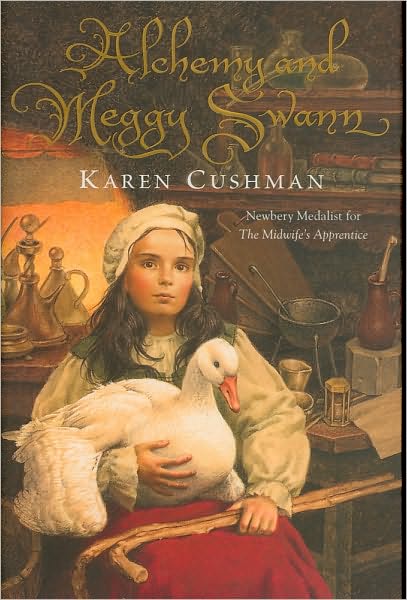
Alchemy and Meggy Swann by Karen Cushman
Set in 1532, Meggy Swann has been sent for by her father. When she arrives though, she finds that she is unwanted, for he has no need of a girl, and a crippled girl at that. Despite a disability that makes it impossible for her to walk without sticks or pain, Meggy begins to make friends and help her father in his great work of transformation.
I have always been a huge fan of Karen Cushman with her strong but time-period correct females with interesting job descriptions. I was also happily surprised by Meggy's disability. Before you read that wrong, I am always excited to see author's writing stories with a special needs character because I think it is important to introduce to children of all sorts. On just this level alone, this book worked for me. Although Meggy is "crippled", the story itself is not about her disability but rather one little girl's search for love and acceptance in a world where both seem so difficult to achieve.
I did find the story to be a little slow at times, leaning heavily on the history and descriptions of London to carry it along. This is a rather small book though, and the slow parts were short, unlike another book that I just read and shall be reviewing next. Alchemy and Meggy Swann is not Cushman's best book, but I think readers will like it just the same.
Set in 1532, Meggy Swann has been sent for by her father. When she arrives though, she finds that she is unwanted, for he has no need of a girl, and a crippled girl at that. Despite a disability that makes it impossible for her to walk without sticks or pain, Meggy begins to make friends and help her father in his great work of transformation.
I have always been a huge fan of Karen Cushman with her strong but time-period correct females with interesting job descriptions. I was also happily surprised by Meggy's disability. Before you read that wrong, I am always excited to see author's writing stories with a special needs character because I think it is important to introduce to children of all sorts. On just this level alone, this book worked for me. Although Meggy is "crippled", the story itself is not about her disability but rather one little girl's search for love and acceptance in a world where both seem so difficult to achieve.
I did find the story to be a little slow at times, leaning heavily on the history and descriptions of London to carry it along. This is a rather small book though, and the slow parts were short, unlike another book that I just read and shall be reviewing next. Alchemy and Meggy Swann is not Cushman's best book, but I think readers will like it just the same.
Fire Book Review
Posted by
Unknown
on Monday, March 18, 2013
Labels:
Young Adult Review
/
Comments: (0)
Fire by Kristin Cashore
Fire is a monster. The only living human monster in the Dells. Equally hated and adored, she has the ability to control minds, but Fire knows firsthand the destruction that can be caused by her monster gifts after watching her father, a monster in more ways than one. When Prince Brigan comes to bring her to King City, she is asked to help uncover a plot against the King. Her power could save a kingdom, but Fire is afraid that to use her powers may unleash a true monster.
A companion novel to Kristin Cashore's Graceling, readers will recognize some names and places, but make no mistake, this book stands on its own. I was told by more than one reader that they couldn't figure out how this book ties into Graceling, which I found an interesting criticism, because I could definitely see what Cashore was doing and how the two storied interlinked. I found it a very interesting and unique way to introduce back story without a bunch of needless back flashes throughout Graceling.
Fire is a strong female character, but her secrets and fear make her vulnerable in a way that I found both endearing and frustrating. I know it must be difficult to live in the shadow of a father as monstrous as hers and yet, I wanted her to realize sooner that she creates her own destiny. Also, Fire's monster abilities can literally cause men to go made, some wanting to rape her while others fall in love with her. This is only heightened if she is on her monthly menstrual cycle and since the story takes place over a period of months, we are definitely given the nitty gritty on that account.
I liked the back story and the introduction of characters, but in the end I don't think I cared about what would happen to Fire only what would happen to the truly evil child who eventually becomes king of the Dells. I am not upset that I read, but I am really looking forward to the sequel Bitterblue, because it is time to find out what happens.
Fire is a monster. The only living human monster in the Dells. Equally hated and adored, she has the ability to control minds, but Fire knows firsthand the destruction that can be caused by her monster gifts after watching her father, a monster in more ways than one. When Prince Brigan comes to bring her to King City, she is asked to help uncover a plot against the King. Her power could save a kingdom, but Fire is afraid that to use her powers may unleash a true monster.
A companion novel to Kristin Cashore's Graceling, readers will recognize some names and places, but make no mistake, this book stands on its own. I was told by more than one reader that they couldn't figure out how this book ties into Graceling, which I found an interesting criticism, because I could definitely see what Cashore was doing and how the two storied interlinked. I found it a very interesting and unique way to introduce back story without a bunch of needless back flashes throughout Graceling.
Fire is a strong female character, but her secrets and fear make her vulnerable in a way that I found both endearing and frustrating. I know it must be difficult to live in the shadow of a father as monstrous as hers and yet, I wanted her to realize sooner that she creates her own destiny. Also, Fire's monster abilities can literally cause men to go made, some wanting to rape her while others fall in love with her. This is only heightened if she is on her monthly menstrual cycle and since the story takes place over a period of months, we are definitely given the nitty gritty on that account.
I liked the back story and the introduction of characters, but in the end I don't think I cared about what would happen to Fire only what would happen to the truly evil child who eventually becomes king of the Dells. I am not upset that I read, but I am really looking forward to the sequel Bitterblue, because it is time to find out what happens.
Picture Books in Review - January through March
Posted by
Unknown
on Saturday, March 16, 2013
Labels:
picture book review
/
Comments: (0)
As usual, a slew of picture books have been rolling in and as usual, I am ho hum about a large majority of them for various reasons, most being that this picture books are start to seem similar with different illustrators conveying their version with various anthropomorphic animals. So here are a few that piques my interest recently, and perhaps they will grab yours.
The Beatles Were Fab (and They Were Funny)
by Kathleene Krull, Paul Brewer, and Stacy Innerst
A child's introduction to the Beatles if you will. For the older, or at least more attentive reader, full of great facts and fun pictures.
Doug Unplugged by Dan Yaccarino
So I have a soft spot for robots in kids books. It is probably the sci-fi nerd in me. But this is an adorable book and I can't help but think of some fun crafts that would go along with this one at a storytime.
All Through My Town by Jean Riedey and Leo Timmers
A potpourri of images and quick rhymes make this book a snap to read through and a joy to read again. Never mind that there is a twist ending, well...as twist as a picture book can get.
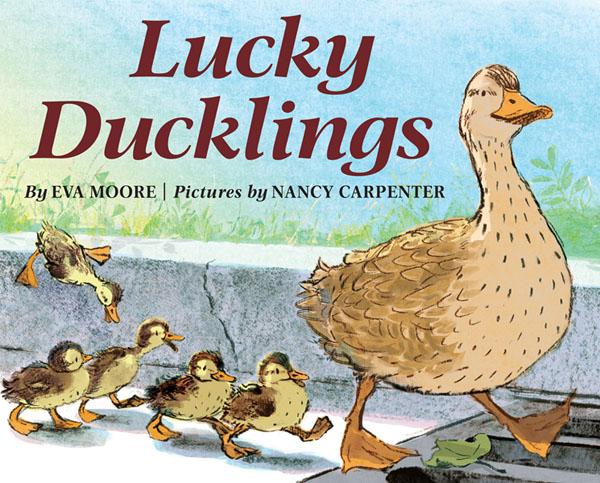
Lucky Ducklings by Eva Moore and Nancy Carpenter
Based on a true story, this is a tale that may have never happened without the help of many good Samaritans. Reminiscent of Make Way for Ducklings, this is a duck tale for the 21st century child.
King of Space by Jonny Duddle
A bit long for a picture book, this is for the older reader, the ones who love the long stories and there is plenty to entertain the eye while a parent reads.
The Museum by Susan Verde and Peter H. Reynolds
It's Peter H. Reynolds...does it really need an introduction?
Open Very Carefully: A Book With a Bite by Nick Bromley and Nicola O'Byrne
For the adventurous reader, beware. I can totally see my nephew enjoying this one.
RoboMop by Sean Taylor and Edel Rodriguez
So far, my favorite book this year. I absolute love this little Robomop, doomed to clean a bathroom in a basement. But he never loses heart and keeps dreaming and I thought it was fantastic!
The Yellow Tutu by Kirsten Bramsen and Carin Bramsen
Who says tutu's have to be worn around your waist? Why not on your head so you can look like a giant flower? And would you keep wearing it like that if someone made fun of you?
Code Name Verity Book Review
Posted by
Unknown
on Thursday, March 14, 2013
Labels:
Young Adult Review
/
Comments: (0)
Code Name Verity by Elizabeth Wein
Julie, code name Verity, has two weeks to live. Two weeks to tell the Germans everything she knows, codes, names, places. In exchange they promise her a swift execution. And so, with painstaking honesty, Julie divulges her secrets.
Code Name Verity was absolutely brilliant. Throughout the first half of the book, I had a difficult time liking Julie. She is selfish, a traitor in the deepest sense of the word, willing to share all in an effort to not be tortured any more. She drags out her story day by day, knowing that with each sentence she is only delaying the inevitable. How is a reader supposed to relate or like a character like this? One that, by her own admission, is going to die in the end?
Then comes the second half, told from the perspective of Maddie, Julie's best friend, and everything changes. Everything. Your opinions of Julie, what she has said and done will be altered for the good. It is difficult to write this review without creating any spoilers and so I will leave it at this: This book was one of the best historical fiction novels I have read in a long time. I would not hesitate to recommend it to teens and adults with the full knowledge that they will be reading a truly wonderful book that deserves to be read more than once.
Julie, code name Verity, has two weeks to live. Two weeks to tell the Germans everything she knows, codes, names, places. In exchange they promise her a swift execution. And so, with painstaking honesty, Julie divulges her secrets.
Code Name Verity was absolutely brilliant. Throughout the first half of the book, I had a difficult time liking Julie. She is selfish, a traitor in the deepest sense of the word, willing to share all in an effort to not be tortured any more. She drags out her story day by day, knowing that with each sentence she is only delaying the inevitable. How is a reader supposed to relate or like a character like this? One that, by her own admission, is going to die in the end?
Then comes the second half, told from the perspective of Maddie, Julie's best friend, and everything changes. Everything. Your opinions of Julie, what she has said and done will be altered for the good. It is difficult to write this review without creating any spoilers and so I will leave it at this: This book was one of the best historical fiction novels I have read in a long time. I would not hesitate to recommend it to teens and adults with the full knowledge that they will be reading a truly wonderful book that deserves to be read more than once.
Homesick Book Review
Posted by
Unknown
on Tuesday, March 12, 2013
Labels:
intermediate book review
/
Comments: (0)
Homesick by Kate Klise
Benny's mother has had enough. After another fight regarding the ever mysterious splinter that is rumored to be a part of "the" cross, she leaves Benny and his father to themselves. Benny's dad has always been a bit of a pack-rat, but now, he is hoarding everything from pizza boxes to old motorcycle parts. As the house begins to fill up, Benny begins to try to convince his dad to get rid of that splinter, because if the splinter is gone surely his mother will return. Meanwhile, a local teach enters their little town into America's Most Charming Small Town contest and the pressure is on to clean up the town and number one on the agenda is Benny's house.
Authentic and poignant, this is a tale about one kid who is forced to become the grown up after his mother leaves and his father's mental health begins to deteriorate. After watching shows like Hoarders, I think we have all become familiar with what it means to be a hoarder, but this story really brings to light how terrifying and overwhelming it is to be on the inside of those houses.
The end felt a little too happily ever after for my taste, but I think it is important when kids are going through situations like this to know that things can end well, that they are not bound into living the way their parents have chosen to live. This may be especially important when dealing with mental health issues.
Reminiscent of Out of My Mind and Dead End in Norvelt, I think this may be one that a lot of teachers and librarians may want to consider for elementary school readers. Oh and did I mention...there is a tornado?
Benny's mother has had enough. After another fight regarding the ever mysterious splinter that is rumored to be a part of "the" cross, she leaves Benny and his father to themselves. Benny's dad has always been a bit of a pack-rat, but now, he is hoarding everything from pizza boxes to old motorcycle parts. As the house begins to fill up, Benny begins to try to convince his dad to get rid of that splinter, because if the splinter is gone surely his mother will return. Meanwhile, a local teach enters their little town into America's Most Charming Small Town contest and the pressure is on to clean up the town and number one on the agenda is Benny's house.
Authentic and poignant, this is a tale about one kid who is forced to become the grown up after his mother leaves and his father's mental health begins to deteriorate. After watching shows like Hoarders, I think we have all become familiar with what it means to be a hoarder, but this story really brings to light how terrifying and overwhelming it is to be on the inside of those houses.
The end felt a little too happily ever after for my taste, but I think it is important when kids are going through situations like this to know that things can end well, that they are not bound into living the way their parents have chosen to live. This may be especially important when dealing with mental health issues.
Reminiscent of Out of My Mind and Dead End in Norvelt, I think this may be one that a lot of teachers and librarians may want to consider for elementary school readers. Oh and did I mention...there is a tornado?
When Life Gives You O.J. Book Review
Posted by
Unknown
on Sunday, March 10, 2013
Labels:
intermediate book review
/
Comments: (0)
When Life Gives You O.J. by Erica S. Perl
There is only one thing 10-year-old Zelly Fried wants more than anything and that is a dog. Zelly is sure a dog will help her fit in with her new neighbors in Vermont, but her parents don't think she is ready yet. This is when Zelly's grandfather, Ace, hatches a preposterous plan in which Zelly will have a "practice dog", made from an old orange juice jug. She must feed it, walk it, and let it do its business. The only problem is how does someone fit in when they are walking around with an old jug?
When Life Gives You O.J. is really one of your atypical middle grade books. New girl in a new town trying to fit in with an eccentric family member whom the child really doesn't understand until something tragic happens. If this is all there had been in the story I may have just been ho hum about this book, but Perl added some flavor, like adding some salt and pepper onto an otherwise bland food and suddenly, it is good. Maybe not the best thing you have ever eaten, but good.
The flavor of this story is the cultural context, with Zelly's family being Jewish. The addition of various Yiddish words and phrases, stories and traditions peppered throughout gave life to a story that could have been bland into something charming. I also think there are a number of themes that young girls will be able to relate to. There were a few moments where I even found myself flashbacking to my own childhood with horrible sleepovers and rocky friendships.
I know this review doesn't make the book sound wonderful, but I really think that girls between 8-11 are really going to enjoy this one and may learn a few Yiddish words in the process.
There is only one thing 10-year-old Zelly Fried wants more than anything and that is a dog. Zelly is sure a dog will help her fit in with her new neighbors in Vermont, but her parents don't think she is ready yet. This is when Zelly's grandfather, Ace, hatches a preposterous plan in which Zelly will have a "practice dog", made from an old orange juice jug. She must feed it, walk it, and let it do its business. The only problem is how does someone fit in when they are walking around with an old jug?
When Life Gives You O.J. is really one of your atypical middle grade books. New girl in a new town trying to fit in with an eccentric family member whom the child really doesn't understand until something tragic happens. If this is all there had been in the story I may have just been ho hum about this book, but Perl added some flavor, like adding some salt and pepper onto an otherwise bland food and suddenly, it is good. Maybe not the best thing you have ever eaten, but good.
The flavor of this story is the cultural context, with Zelly's family being Jewish. The addition of various Yiddish words and phrases, stories and traditions peppered throughout gave life to a story that could have been bland into something charming. I also think there are a number of themes that young girls will be able to relate to. There were a few moments where I even found myself flashbacking to my own childhood with horrible sleepovers and rocky friendships.
I know this review doesn't make the book sound wonderful, but I really think that girls between 8-11 are really going to enjoy this one and may learn a few Yiddish words in the process.
Divergent Book Review
Posted by
Unknown
on Thursday, March 7, 2013
Labels:
Dystopian SciFi,
Young Adult Review
/
Comments: (0)
Divergent by Veronia Roth
Beatrice Prior lives in a world split into five factions, each one dedicated to upholding and cultivating a particular virtue. The honest Candor, selfless Abnegation, brave Dauntless, peaceful Amity, and intelligent Erudite have been living together in virtual harmony for as long as anyone can remember. Beatrice, who has grown up in Abnegation is thrown for a loop when her test results show that she is Divergent, a term that is so secret that not even she is supposed to know what this means. Despite her fierce love for her family, when the time comes for her to choose which faction she belongs in, Beatrice chooses the brave Dauntless. But not all is at it seems, and Tris (formerly Beatrice) must learn that true bravery requires the use of all the factions, especially if she is going to survive.
My co-workers have been buzzing about this book for quite a while. The books are sold by the truckload. I wasn't resisting reading it, but despite the buzz, no one was actually buzzing about what the book was about, just that Hunger Games fans would love it. This is both a plus and a minus for me. One the one hand, I enjoyed the first book of Hunger Games and really do love dystopian sci-fi. Check out my fan-girl rants about The Maze Runner if you have any question about that. On the other hand, Hunger Games has become the 'it' thing, and every writer is trying to do it with varying levels of success. Because of this I both excited and wary of books that are touted as a you-will-love-this-book-because-you-loved-that-book.
I liked Divergent. Didn't love, but I liked it. The pacing and plot were quick and interesting. Tris is an understandably conflicted character who I expect is going to have some real psychological damage in the sequel. The love story wasn't too heavy handed although I always find it curious when characters fall for each other without knowing a thing about the other person. I wonder what will hold their relationship together once they get past the difficult times and just have to live? It is possible that I consider these things more now that I am married, but it is no secret that I am highly suspicious of the romance elements in any book.
My favorite part about this book is that it kept me guessing. I didn't know what was going to happen or how the story would unfold. For someone who reads as much as I do, this is rather important because I get bored when I can guess exactly what will happen in a story. (Currently trying to finish The Dark Unwinding and I think it is terrible because I know exactly how things are going to turn out.) It was nice to have characters who were truly tough and unlike Hunger Games had chosen to be part of a group in which they were expected to be. The conflict with the characters was in the competition, but the competition, even when life in death, made the Tris and her friends seem more human. It also made their tormentors more human as well.
Beatrice Prior lives in a world split into five factions, each one dedicated to upholding and cultivating a particular virtue. The honest Candor, selfless Abnegation, brave Dauntless, peaceful Amity, and intelligent Erudite have been living together in virtual harmony for as long as anyone can remember. Beatrice, who has grown up in Abnegation is thrown for a loop when her test results show that she is Divergent, a term that is so secret that not even she is supposed to know what this means. Despite her fierce love for her family, when the time comes for her to choose which faction she belongs in, Beatrice chooses the brave Dauntless. But not all is at it seems, and Tris (formerly Beatrice) must learn that true bravery requires the use of all the factions, especially if she is going to survive.
My co-workers have been buzzing about this book for quite a while. The books are sold by the truckload. I wasn't resisting reading it, but despite the buzz, no one was actually buzzing about what the book was about, just that Hunger Games fans would love it. This is both a plus and a minus for me. One the one hand, I enjoyed the first book of Hunger Games and really do love dystopian sci-fi. Check out my fan-girl rants about The Maze Runner if you have any question about that. On the other hand, Hunger Games has become the 'it' thing, and every writer is trying to do it with varying levels of success. Because of this I both excited and wary of books that are touted as a you-will-love-this-book-because-you-loved-that-book.
I liked Divergent. Didn't love, but I liked it. The pacing and plot were quick and interesting. Tris is an understandably conflicted character who I expect is going to have some real psychological damage in the sequel. The love story wasn't too heavy handed although I always find it curious when characters fall for each other without knowing a thing about the other person. I wonder what will hold their relationship together once they get past the difficult times and just have to live? It is possible that I consider these things more now that I am married, but it is no secret that I am highly suspicious of the romance elements in any book.
My favorite part about this book is that it kept me guessing. I didn't know what was going to happen or how the story would unfold. For someone who reads as much as I do, this is rather important because I get bored when I can guess exactly what will happen in a story. (Currently trying to finish The Dark Unwinding and I think it is terrible because I know exactly how things are going to turn out.) It was nice to have characters who were truly tough and unlike Hunger Games had chosen to be part of a group in which they were expected to be. The conflict with the characters was in the competition, but the competition, even when life in death, made the Tris and her friends seem more human. It also made their tormentors more human as well.