RSS

Of Domes and Other Things

In the Arizona dessert there are series of interconnected glass domes and pyramids called the Biosphere 2. Originally conceived as a self sustaining ecological system the experiment was a miserable failure in the early 90's when it was revealed that the plants weren't producing enough oxygen and the people inside had to breach the airlock when one of the scientists' leg was broken. The biosphere was a realization of an idea that has intrigued science fiction writers and scientists for decades. Sci-fi writers see these domes of furtile places for the imagination, often representing oppression. However, scientists see these self-sustaining cities as possible habitats for human life in the moon or Mars.


Early science fiction (pre-Global Warming days) usually showed domes as space colonies. Various writers put domed cities on Venus, Mars, and the moon. Other writers used domes cities to show the ills of ouor society and government. In the short story by E.M. Foster "The Machine Stops", humans live in a vast series of rooms in an underground machine that provides everything they could ever need. However, the machine eventually breaks down causing the inevitable death of all its citizens. Arthur C. Clarke saw domes as a retreat in The City and the Stars, a modern day (1950's style) Eden.


The first mention of a domed city was in 1881 in the white supremacist fantasy Three Hundred Years Hence by William Hay, besides being full of only white people Hay's domed city is mostly used for agriculture. In 1905 H.G. Wells suggested A Modern Utopia where at least part of cities were covered over in glass. in 1931 Ray Cummings wrote Brigands of the Moon where people lived in small glass dome shelters. James Blish created the idea of a spindizzy in his series Cities in Flight in which cities could take off into space at will. Logan's Run originally published in 1976 built domed cities to escape polution and war. In 1982 Ben Bova published A City of Darkness where domes were playgrounds during the day, and terrifying by night.


But these are all adult books you say. Never fear, domed cities infiltrated children's literature as well. The Tripods series by John Christopher has humans living as slaves beneath alien domes (very similar to Battlefield Earth, which is never read due to its scientology affiliation, but is really quite good) In 2010 A Crack in the Sky by Mark Peter Hughes was published with the domes being run by a corporation that isn't admitting that the domes may be falling apart piece by piece. Some may even argue that Incarceron by Catherine Fisher could be considered a "domed" city. Songs of Power by Hilari Bell is about an underground domed city and Away is a Strange Place to Be by H.M. Hoover features space habitats, very similar to domed cities.


But just in case you thought this was all some kind of fictional enterprise, feast your eyes on the newest form of domed city from the minds of the Chinese.

Empty Book Review

Empty by Suzanne Weyn

The oil is running out faster than anyone expected and Tom, Nikki, and Gwen are stuck right in the middle of a change that may be the end of the world as they know it. Food shortages are on the rise, gas syphoning, and violence are becoming more and more prevalent, but all these teens want is a little normalcy. Tom wants Nikki, rich cheerleader, but Gwen is mysterious in a way that Tom finds attractive. Nikki's whole world is changing, and not for the better and she struggles with keeping a normal life and still looking good despite having to wear glasses. Gwen's mother left her and her brother years ago and they have managed just fine on their own until a freak fire and a super hurricane crash her world.

The premise of the story is great and fun to think about although not terribly original. (see Crunch review) Unlike Crunch, this book often felt preachy, with large amounts of info dumps in the first half of the book. Long conversations about manufacturing and the oil being depleted and a long list of products that are no longer available because of the oil shortage. Of course, as if this wasn't enough of a sermon, the author added a super hurricane created by global warming. Just in case you didn't get that the earth is going to be destroyed. One of the things I loved about Crunch was that it didn't matter why they had run out of gas, the point was that it was gone and people had to move on with their lives.

This is mostly a story about running out of gas with naive characters complaining about the gas costing $40 a gallon, having to wear glasses, and dumb crushes as a giant hurricane is hurtling towards them and they are running out of food. What I couldn't understand was that not a single person ever hopped on a bicycle until the very end. Everyone is still driving around with the gas prices at $40 a gallon or more. Are you kidding me? Not a single person saw this coming and built a windmill or have solar power or grow things in a garden? I can tell you, as an avid bicyclist, I already think gas prices are too high and know for a fact that people are already beginning to plant gardens and live more green. I do not think that people would allow gas prices to reach $40 a gallon and not do a single thing about it. At the very least, wouldn't people begin to hoard food?

On a writing level, I am afraid that all of the characters except for rich spoiled Nikki, sounded exactly alike. Without dialogue tags I would never know how was speaking. The constant grumbling about phones now working and lack of warm showers got old. There was never a character who tried to bring things into perspective. No character who though...hmm...maybe I should build a fire to make food. The news articles littered throughout the novel were written with the same voice as the rest of the book, making them feel less than credible and entirely like more info dumps.

The author is right about one thing. This is an issue that should be brought to people's attention, but I would hope that we and our government would not be as idiotic as the people in this book. I can promise you this...if the gas prices ever reached that point, I am sure more people would be riding public transit, bikes, and subways, because it is already happening. There would be incentives for building windmills and solar powered homes. Personal gardens would become the norm and the teens would have to go on with their lives and would not be bellyaching over cell phones not charging because we would have products like this. Humans are amazing creatures who can surely find other ways to survive and create electricity without oil...oh wait, we already are doing that.

Dormia Book Review

Dormia by Jake Halpern and Peter Kujawinski

Alfonso has a very unique gift, or perhaps it is a curse. Alfonso can do things in his sleep. But this isn't sleepwalking, because unlike the average sleepwalker who wanders around the house or perhaps make a sandwich, Alfonso climbs trees, repairs clocks, sword fights, and grows plants. In his small town of World's End, Minnesota, this may be strange, but Alfonso soon learns that he is a descendant from a lost and mythical land called Dormia, a place where the citizens are their best when asleep and the last city of Dormia will die unless Alfonso and his strange group of travelers can deliver a Dormian Bloom.

The premise of the book is great. A race of people who have the ability to do anything in their sleep. With the opening of the book the reader is dragged in as we find Alfonso literally up a tree and he has no idea how he got up there and being rather clumsy while awake, isn't entirely sure how to get down. Despite the beginning being set in Minnesota, this is definitely a high fantasy novel, and frankly if Minnesota had been named something like Andalasia (Enchanted reference) then the reader would never have known that this is supposed to be Earth.


Written by two authors, this is a high-energy fast paced novel that is just begging for a sequel. The cast of characters are varied although not well fleshed out. After reading this 500 page tome, I am still unsure of the motivations for a few of these characters. Why would a man who is not Dormian, follow a kid and his Uncle halfway around the world for a fight that isn't his? Alnfonso fights for this kingdom that he has never visited, isn't sure is real, and doesn't intend to stay with. This made him feel more like a puppet than a warrior. The whole country itself has secreted itself away from the world, reminding me of a North Korean Prison. Not exactly inspiring.


I was also unimpressed with the so=called smarts of our main character. Most of the "puzzles" he needed to solve were extremely simple and then he completely ignores clues given to him for another puzzle, which after solving so many of these mind-benders, it seems strange that he couldn't or wouldn't solve this last one. Also, as is often the case in fantasy novels involving any kind of magic, the character always seems to learn some new skill just before he needs to use it, which I have always found suspect.


What this book really suffers from though is a bad case of repetition. The authors often felt it necessary to remind the reader of poems, conversations, history, and descriptions that the reader has already been made aware of, which makes this book about a hundred pages longer than it needed to be. I admit, I am a skipper when I run across information I already know and as a reader I feel like I am being talked down to. Like the authors are saying, "Remember that poem ten pages ago? Well we don't think you do so we are going to spell it out for you again just to be sure you get it."


Although the book wasn't written badly, I often found myself reading just because I wanted to finish it. I have a bas case of have-to-finish-a-book-itis. There is enough adventure and fun elements to hold the attention of middle grade readers, but I think some editing of repeated details and a little more attention to character development would have really made this book great.

Unwind Book Review

Unwind by Neal Shusterman

Under the new Laws of Life, parents have the option of "unwinding" their children any time before their eighteenth birthday. If your kid is a troublemaker, a hothead, or no discernable talents, they will take him or her and use their parts, all of them, to go to other citizens. Need a new heart, kidney, lung? There is always one available with the unwind program. Some religion even encourage parents to tithe one of their children for the good of others. But not everyone is going along with the program. Connor discovers his parents are going to have him unwound in a week, so he runs away. Risa is a ward of the state and is part of a population reduction in the state houses. When Connor runs out into traffic and her bus stops, Risa decides to make a run for it alone with a Tithe that Connor grabs called Lev. Together this unlikely trio must survive until their eighteenth birthdays.


In the vein of Rash by Pete Hautman and Uglies by Scott Westerfeld, Unwind is a sci-fi mind game that both repulses and inspires. All three children are well flushed-out with stories and histories that make this whole ordeal beyond terrifying. Lev's parents have told him all his life that he will be tithed and he wasn't afraid until that day Connor took him from the car and his Pastor told him to, "Run." Confused, Lev questions everything his parents have taught him and soon anger takes hold. Connor always knew he had anger issues, but he never imagined his loving parents would have him unwound. Risa never had parents and although a good pianist, she couldn't win the competition to save her own life.


On the logistical side of thing (and controversial side), I think the idea of Unwinding is repulsive, which is what Shusterman was aiming for. And it is also completely unrealistic. In the "history" of the book we come to understand that those who are Pro-Life and Pro-Choice agreed to this plan, which just smacks both groups in the face. No way would either think it is okay to dismember a person--a child--in order to have organ donors. That idea that any person would agree to the death of someone because they "believe" the person's soul lives on in others and doesn't die, is stupid. however, this is a fantasy, so we will, for the sake of the story, have to let it go.


The other interesting development in the story is the idea of storking. No longer do women have abortions (because the child can live in a group home and eventually be unwound), but you can also leave your child on the doorstep of whomever you wish and as long as they don't catch you, the baby is theirs for keeps (or until they have the child unwound). Now, just thinking about the state of overpopulation now, I would imagine this would be a very very bad idea. Plus, what if the family who is storked cannot support the child. Or the child is unloved, which is supposedly why this law was created, so that there were no more unloved and unwanted children. In fact, this entire world that Shusterman has created is very Spartan in nature.


As far as sci-fi goes, this is a good book that gets you thinking. The writing is well-done and the characters are believable, but I don't think we have to worry about this ever happening. Despite thousands of years worth of plagues, overpopulation, childhood diseases, and even Spartans...children are still valued and are likely to remain so.

Countdown Book Review

Countdown by Deborah Wiles

Franny would do anything for her life to be peaceful, but with the threat of nuclear war on America's doorstep, a feuding friendship, a shell-shocked Uncle, and a missing sister, Franny's life is anything but peaceful.


Part autobiography, part documentary, Countdown reads like narrative history and catches the essence of what it would be like to be a child in such a tumultuous time. Franny lives every day of her life afraid that this one will be her last. Will the Soviet Union bomb them today? Will she live to grow up or will her life be cut tragically short just like her Uncle's little brother?


My first memory outside of my own little world was when I was eight. I watched mesmerized as the Berlin wall was pulled down piece by piece. I had a million questions and my parents sat beside me, tears in their eyes, as they explained this weird terrifying world we live in. Deborah Wiles grew up during the beginning of that Cold War. Her first memories were of the fear of those times and in some strange way, I can relate. Except my parents were forthcoming with information and poor Franny is often left completely out of the information loop. As it stands this is really Deborah's story. Although Franny and her family are fictional it is clear that this is the author's time period. This is what she remembers. And by making a character to close to herself and her memories, the reader has a character they can relate to.


My only real criticism or perhaps question is the necessity of the essays of the different people throughout the book. They read like book reports written by Franny, but it felt too much like teaching and threw off the timeline sometimes since the essay would follow the historical figures far past the time portrayed in the book. I liked being rooted in 1962 and felt that the essays pulled me out of it.


Among my favorite parts of the book were the visual references with quotes, pictures, and speeches surrounding the events of the Cuban Missile Crisis. The story itself was engaging although really nothing terribly important happened. It's not really an adventure story, it's history and I can probably assume that it was some great therapy for the author. The book doesn't preach (except for the last page) and Ms. Wiles allows her young readers to figure some things out for themselves.


Although I think young readers will enjoy this book, I can't help but wonder if the children who grew up in this era, now grown with children and grandchildren, would enjoy it more. An opportunity to relive those moments through someone else's eyes and a reminder of how precious life and living it, is.


A Conspiracy of Kings Book Review

A Conspiracy of Kings by Meaghan Whalen Turner

I make no secret in that I absolutely love The Queen's Thief series. With the whit and cynicism displayed by Eugenides (aka the Thief), I instantly fell in love with him and the twist ending makes me grin every single time I read it.


In the fourth installment of The Queen's Thief series we now follow Sophos, (originally introduced in the first book and missing for the past two books) heir apparent to the Sounis throne. From the beginning, Sophos has been an embarrassment, terrible with the word, easily cowed, and not very brave, Sophos suffers silently as he is groomed to be King, a role that he desperately hopes he will never have to fulfill. His wish comes true when he is kidnapped, only to be sold into slavery to the very Baron who was trying to kill him. Under the Baron's nose Sophos works as a slave and he doesn't mind so much as the pressures of prince hood are gone. But his captivity is short-lived because despite all his apprehensions, Sophos is to be King. After his uncle dies, Sohpos inherits the throne, but a bloody war with Attolia and a civil war between his own barons as well as an "ally" that is secretly trying to control the country, Sophos knows he needs help. With the Magus, he escapes to Attolia to surrender to his old friend Eugenides, now King of Attolia.


Some may be frustrated by the fact that Eugenides plays a minor role in this book, but I absolutely love how this series has progressed. In The Thief and Queen of Attolia we followed Eugenides (Gen) exclusively. In King of Attolia we were in the head of one of Gen's guards who despises him. Even so, you find yourself rooting for Gen because the reader knows him so well. Now, with A Conspiracy of Kings the story has come full circle, bringing us back to a character from the first book. When Gen is aloof and cold towards Sophos, the reader knows that there is more to the King than meets the eye.


This installment is decidedly more political than the other three, but it fits the temperament of Sophos and this is definitely his book. Interesting point: None of the characters in these books are children, but they are middle grade books. Gen was perhaps a teenager in The Thief but that isn't made expressly clear. What does that say about children having to have characters that are close in age to them in order to enjoy the story? Perhaps it is this unusualness that has allowed me to enjoy this series from childhood to adulthood.


If you haven't read The Thief then I highly recommend you do so. And then real all the others. By the way, you will probably find the book with the Award Winners as it did win a Newbery Honor Award.

The Curse of the Blue Tattoo Book Review

The Curse of the Blue Tattoo: Being an Account of the Misadventures of Jacky Faber, Midshipman and Fine Lady by L.A. Meyer

Now that the crew of the Dolphin knows of Jacky's feminity, she can longer remain on board. With her share of the pirate's treasure the Captain "graciously" enolls Jacky in the elite Lawson Peabody School for Young Girls in Boston. Despite being separated from her dear Jaimy, Jacky decides to make the best of her situation andis rather excited that she, a lowly girl from the slums of London, will be learning how to be a lady But as you can imagine, Jacky, owner of a tattoo and quite a few stories, doesn't exactly fit in. Before long Jacky is up to her neck in trouble being arrested for led and lascivious behavior, falling under the suspicion of the crazy reverend next foor as a waitch, investigating a murder, and eventually being demoted to a servant girl. Maybe Jacky just wasn't meant to be a lady.


The second installment of Miss Jacky Faber is quite different from the first and yet just as fun. By now,t he reader is wel familiar with Jacky's shenanigans and it is no surprise the trouble he gets herself into. And that is wy you read. What is Jacky going to do now? So is it any surprise that when someone tries to press a friend of hers into service on a ship, Jacky drops her skirt, climbing into the rigging of the ship, and threatens to cut the sails? Never.


L.A. Meyer also does a wonderful job of describing an 1800 version of Boston. Having studies and lived there, I loves these descriptions. I could follow Jacky's every footstep having walked on beacon Street, Milk Street, and State Street. I could imagine the old State House well for I have been in it. The history and geography were wonderful and made the story feel so authentic and lovingly researched. Every detail was perfect and spot on.


The third book is on its way and I am very excited.

Bloody Jack Book Review

Bloody Jack: Being an Account of the Curious Adventures of Mary "Jacky" Faber, Ship's Boy by L.A. Meyer

Mary Faber has been forced to take care of herself since the day her Mum, Dad, and little sister die of plague. Joining the Rooster Charlie gang, Mary begs, borrows, and steals her way to another day of life. They sleep beneath a bridge and occasionally Mary uses her talent of reading to earn them a farthing or two. But when Rooster Charlie is murdered, Mary takes the opportunity to relieve him of his clothes, which he won't be needing anymore, and signs up to be a Ship's boy aboard the Dolphin. And so Mary becomes Jack or Jacky Faber, Ship's boy. Her adventures tale her all over the Atlantic, fighting the French, chasing pirates, and falling in love with Jaimy who has no idea that Jacky is a girl.


This story is absolutely delightful. It's Treasure Island and Alanna: The First Adventure rolled into one. Written in first person dialect, Jacky's quick tongue and bravery will make anyone fall in love with her, despite her propensity for trouble. And get into trouble she does. Nearly beaten senseless by one of the Midshipmen, almost raped (and that was when the sailor thought she was a he), the instigator of a bond between the Ship's boys that results in permanent anchor tattoos, as well as being carried off by a kite, and hung by pirates. And those are just her finer moments. Yet Jacky is a girl despite all her lies and admits that despite everything, she isn't really that brave. This is a breath of fresh air where many historical novels often have the tomboy girl absolutely hating her womanhood. Jacky is simply a survivor, but beneath everything, she is still a girl.


Need a good adventure story? This is it. I don't know if the boys would be as interested in the story as there is a lo of pining done by Jacky as well as some womanly problems that may make the boys blush, but if you are looking for a strong, smart, witty, and lovable protagonist then look no further than Jacky Faber. She will make you laugh and cry and want more and lucky for us L.A. Meyer has written eight books featuring our Miss Faber.

The Last Invisible Boy Book Review


Illustrated by J.P. Coovert


Finne Garrett was an average kid with pinky peach skin and black hair until That Dreadful Day. That was when Finn began to turn invisible. At first it was a few white hairs. Shock s what everyone thought, but over the next few weeks, Finn's hair turns completely skin and his skin just as pale. Why? Is it really shock, or is he becoming a vampire, or worse, is he truly turning invisible?


The premise of the story is great; a boy slowly disappearing due to the death of his father. But that's all there is in the way of a plot. It reminds me of a lecture I once heard with Allison McGhee in which she admitted that plot often eludes her. Once, when a friend asked for some good plot ideas, she send back an email with these two words, "Albino squirrels." Not much of a plot, but it is a place to start. That is how I felt about The Last Invisible Boy. The idea itself was great, but it didn't really go anywhere. Finn has no actual character development in the story. If this was really a story about a kid getting over the death of a parent, then I was a little confused. How exactly did Finn move on? By planting a tree? By not hanging out in the cemetery as often? And most importantly, why was Finn turning invisible?


This story reminded me of many of the things I was taught not to do in writing. Info dumps all over the place. In fact, most of the chapters were written to give us another load of information about Finn, information that never really moved the story forward. Written in first person journal style, I was often confused by Finn's references to everyday being Earth Day and his insistence on mixing up his tenses. Strangest of all were the instructions to the reader where he tells them to write down something or stop reading. Do you really want your readers to put down the book they are reading? The other really important information was left out of the book. What did his father die of? I assume a heart attack, however young readers cannot be expected to assume this and for some reason Finn never actually says, which made me wonder if he even knew. When he finally explains "That Dreadful Day", I got the firm impression that none of the adults were forthcoming about what was going on, something that I don't think would happen if the child was twelve. Perhaps if he was younger, but twelve is more than old enough to know what is going on. Secondly, why was Finn turning invisible? Not even Finn seems to know and in the end I was a little annoyed because this was the promise of the story and nothing really came of it. Was it supernatural or not?

All that said, if I had a young child who was dealing with the death of a parent, particularly a father, I would recommend this book in a heartbeat because despite its plotlessness, the story itself may well help a child dealing with a situation like this,

My Reading Highlights of 2010


Books That Made Me Laugh Out Loud:

Can I Play Too? (An Elephant and Piggie book) by Mo Willems

The Siren Song by Anne Ursu

The Outlandish Adventures of Liberty Aimes by Kelly Easton and Greg Swearingen


New-To-Me Series That On One Hand I'm Glad To Have Found, But On The Other, I'm Seriously Horrified That I'd Missed Out On Until Now:

Bloody Jack: Being an Account of the Curious Adventures of Mary "Jacky" Faber, Ship's boy (Bloody Jack Adventures) by L.A. Meyer

Sequel Happiness:

The Scorch Trials by James Dashner

Behemoth by Scott Westerfeld

Book That Made Me Crave Food:

Fat Vampire by Adam Rex

Most Enjoyable Bad Book:

Vampire Diaries by L.J. Smith

Forgettable Plot Saved By a Fresh, Honest Voice:

The Strange Case of Origami Yoda by Tom Angelberger

Book I Was Most Surprised By:

The Graveyard Book by Neil Gaiman

Made of Pure Awesome:

The Tomorrow Code by Brian Falkner

Crunch by Leslie Connor

The Graveyard Book by Neil Gaiman

Newsgirl by Liza Ketchum

Out of my Mind by Sharon Draper

Best Book Hidden Under the Worst Cover:

Pride an Prejudice and Zombies by Seth Grahame-Smith

More Adorable Than Sparkling Puppies:

Birdie's Big Girl Shoes by Sujean Rim

YA Book Most Likely to be Loved By Adults More Than Actual YAs:

Uglies by Scott Westerfeld

Biggest Disappointment:

Mockingjay by Suzanne Collins

Books that Invoked Irrationally Violent Emotions in me:

Stuck in Neutral by Terry Trueman

Out of my Mind by Sharon Draper

The Compound by S.A. Bodeen

Books I Loved For Their Imperfect Heroines:

Fat Cat by Robin Brande

A Northern Light by Jennifer Donnelly

Best Vampire Book For Twilight-Haters:

Fat Vampire by Adam Rex

Worthy of the Hype:

Knuffle Bunny Free by Mo Willems

Favorite Roadtrip Book (and MAN, there were a lot of them!):

Ranger's Ransom by Emily Diamand

Best Action/Adventure Book:

The Scorch Trials by James Dashner

Books that were weird just to be weird:

It's a Book by Lane Smith

The Boy Who Couldn't Die by William Sleator

Sci-fi's that made me think there is still a future for this genre (future, get it):

The Tomorrow Code by Brian Falkner

Crunch by Leslie Connor

Monsters of Men by Patrick Ness

X-Isle by Steve Augarde

Books I lent out to people multiple times:

Hunger Games by Suzanne Collins

Jumper by Steven Gould

The Tomorrow Code by Brian Falkner

Worst Book of the Year:

The Last Thing I Remember by Andrew Klavan


Have a question about this list. Wonder why I loved or hated a book? Leave a comment...let's discuss.

Setting:New York City - Reality:None

Despite the lack of book reviews, I promise I have been reading quite a few books over the past few weeks, and through no fault of my own, many appear to have the same interesting trend. The trend being this: That more and more teens are fairly wealthy and live in New York City in apartments that are larger than their other rich friends but never have the one thing they want the most. For boys, this is often a girl, often blond and also rich who doesn't give the main character the time of day because she is currently going out with someone richer and/or manlier. For girls, they are usually searching for popularity and something equally mundane, while trying to squash their opponents/other girls. As an added bonus, these teens often find themselves searching for meaningful adult relationships with the parents who have neglected them due to their money. Take the following books into consideration:


Not to say that all these books are trash, in fact some teeter on the edge of being decent, and a few like The Boy Who Couldn't Die and Beastly are actually rather fun. But most are Sweet Valley High without the kitsch and teens are devouring books like this. Why? Is it because we all imagine what it would be like to be rich? But as you can see, it isn't just the book packaged mass produced series that contain this trend.

The second most popular setting appears to be all girl's boarding schools which is fascinating because although I know they really exist, a raise of hands as to how many people went or know anyone who actually went to one? Off-hand, I can think of only one acquaintance who I worked with ten years ago.

And why are so many books set in New York City? May I venture to say that I imagine for editors (the majority of which work in NYC), would find a book set in their stomping grounds to be more appealing that one set in Wisconsin? As a child who grew up in New Jersey, I used to imagine that New York City was teeming with children my age simply because I had read so many books set in that city that I used to imagine that this was where most of the children of the world lived. I used to imagine that there were roving gangs of children wandering the city treating one another cruelly with no parental supervision. Harriett the Spy may have been to blame for this notion.


All I know is, I am tired of reading about rich people in large apartments in NYC. I think it is time to return to my beloved genre fiction. I'm in the mood for a distant planet full of aliens or a land where the rich are nobility and everyone despises them for it. Any suggestions?


Knuffle Bunny Free: An Unexpected Diversion by Mo Willems

Trixie and Knuffle Bunny are back in this third and final tale of Knuffle Bunny and it is just as delightful as the others. In this tale, Trixie and her family are going on a vacation overseas. As any parent has experienced, it is very easy to misplace things when traveling and Trixie is no exception. Caught up in the delight of flying and visiting Oma and Papa, he leaves Knuffle Bunny on the plane and by the time they realize, the plane is headed to China!

One of the more uncommon themes in a children's picture book is the coming of age story. Some may argue that all picture books are a coming of age story, teaching the children who read them important lessons to help them in their growing up journey, but the Knuffle Bunny books have allowed children to watch Trixie grow from an unintelligible baby, to a little girl beginning preschool, to the cute blond who discovers happiness without her Knuffle Bunny. And I'll tell you, I may have shed a tear at the end. Okay, maybe more than one for the back pages of this book are incredible.


Mo Willems does it again. Knuffle Bunny is a cute, funny, coming of story, set in another country, with all the love and passion of the previous books. This one definitely deserves to be a Christmas gift.


The Game of Sunken Places by M.T. Anderson

Gregory and Brian arrive at their Uncle Max's house for what will admittedly be a strange fall vacation. True to form, eccentric Uncle Max lives in a giant mansion where he immediately burns the boys' clothes and forces them to wear clothes the turn-of-the-century. The 20th century. They sleep in a nursery where they find a strange fame called the The Game of Sunken Places. But Jumanji this game is not. There are no dice or pieces just an hourglass that is slowly counting down--but to what? The boys are in a race against time, bu they don't know the rules and this game is deadly.

This books is full of wonderful descriptive elements that really bring this world to life. You can feel the crisp fall New England air and whenever the wind blows, there is a creepiness that will crawl up under the covers with you. Yet, for all the brilliant descriptions, it reminded me of a movie where the editing is slightly off. The scenes jump, with only a sentence to bridge where they are going. If you aren't paying attention the characters are suddenly going down a flight of stairs and you aren't quite sure how they got there. Yet Anderson is unafraid of spending an entire paragraph describing an object or using poetic language to make us understand the wind or the languishing canal. All of this is the same issues I have had with other M.T. Anderson novels. Anderson is a brilliant writer, with language and sentences that any writer could be envious of, but sometimes it throws off the pacing. This is not due to lack of plot, but because Anderson doesn't pay the same attention to detail in all aspects of his writing. His language is beautiful and his transitions feel stilted.


The characters in this story are great though, although you may be surprised as to who the main character really is. We are taken on a journey with the Brian and Gregory and I'll admit, I wasn't sure if they could win, although I knew they must.


Anderson does take us on a journey, but I often myself wondering why these boys went on the journey in the first place? Perhaps that is the wrong question for a fantasy novel, but if this happened to me as a child...I don't think I would have continued to play the game. Perhaps that is the joy of this book though, Brian and Gregory go on a journey that most people would be too afraid to set out on. Not a bad book, but it isn't one of Anderson's best.

Mockinjay by Suzanne Collins

Let's get one thing straight. I didn't finish this book. I made it 2/3 of the way through and stopped. I couldn't continue. Some was due to friends telling me that the book was great and then the last 1/3 of the book just died. One friend was so upset he said he threw the copy of his book (hardback) into the trashcan. He hated the ending that much. I told myself it didn't matter, that I needed to know the ending, but I just can't finish it. I think I am happier with the ending I have created in my head. Also, I grow weary of Katniss.

I promise I won't spoil the book for those who haven't read it yet, but I ca tell you this...Katniss is bring. All she does is sit around and whine and complain as those in power use her as an unwilling and completely naive chess piece. She acts as if she knows what is going on, but as far as I can tell (for the amount I read), Katniss is never a real instigator of anything. She is always the pawn. This girl was completely clueless about the insurrection her acts of "defiance" created. Not that she was ever willfully defiant, those acts were always completely by accident. In act, it feels like everything Katniss does is an accident. She is terrible at fake acing, so they drop her off at a field hospital where she witnesses the death of hundreds and finally is able to deliver her defiant line about fighting. Truly, it was just a happy accident. Would she have been able to deliver such a line if no one had died? Probably not, because Katniss doesn't do anything with purpose. Falling in love. Friendships. It all just happens to her and the poor thing is just along for the ride.


What made this book harder to swallow was that Katniss was the only character telling the story in this narrative. No jumping to Peeta's viewpoint, which was a little annoying a he is a far more interesting character. Also, in this book he is clearly being tortured and for some reason I could never figure out, the rebels label him a traitor, which just made no sense. It's like calling a Prisoner of War a traitor simply because they had the misfortune to be captured. They already know the government is manipulative and that Peeta was in danger by leaving him in the government's hands, but the instant he appears on television they call him a coward? The logic just doesn't pan. But why aren't we given Peeta's perspective as in the other books?


For me, the setting and plot of this final book are weak. Which makes the characterization so much more critical and sadly, it fell. I think it was already stumbling in Catching Fire, but for me this books failed. Anytime I can't finish reading a book out of fear that the author just can't fix all the mistakes they are making is a very bad thing indeed. I need my characters to be intentional. Especially the heroes. And especially if they are willing heroes like Katniss is supposed to be in this final battle.

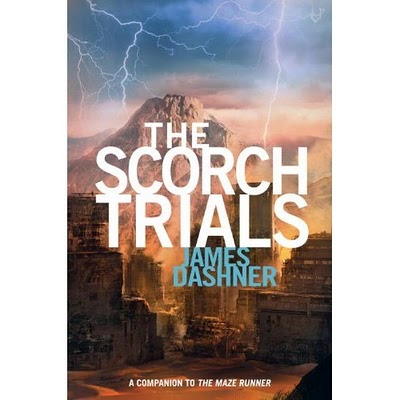
The Scorch Trials by James Dashner Book Review

The Scorch Trials
By James Dashner
The Gladers have escaped the Maze, after losing nearly everyone including Chuck, only twenty are left alive, taken to some safe house where they are fed and given warm beds. Book Two opens as the boys are woken from their dreams by Crazies with cracked faces, screaming at the windows. Within hours of rescue, the boys are thrown into a situation worse than before. This time there are metal balls that drop from the ceiling that literally suck your head off. Lightning bolts from the sky that will fry a person where they stand. Crazy people who will chase you down just to chop off your nose. Beings with light bulbs on their bodies. Betrayal. Friendships. Loss. Pain. Mystery.
Book two of The Maze Runner series starts right where the last book left off. No back-tracking. No quiet reminders of what happened last time. If you didn’t read The Maze Runner, don’t read this book because you will be more than confused. No starting in the middle for this series. And all those questions left in book one…Why were they locked up in the Maze? Who are they? Why kill Chuck? Who is WICKED? What do they want with the Gladers? What is The Scorch? What is the purpose of them being there? Who was Thomas to WICKED?
Not a single one of those questions is answered fully.
I liked the book. Lots of action and adventure, however, I really needed some questions answered and after two books I am growing impatient. Of course I will read the next one. I want to know the answers. Here’s the catch—those answers better be damn good. I usually figure out twist endings, yet I have no idea where this storyline is going, so the answers to all the questions listed above will have to be mind boggling. I think after two books, the readers deserve that much.

I'm Back!

Did you wonder where I had gone? Well, I got a new job. One of those new 9-5 jobs which means I work 8-6:30. Then I moved. Then my computer was stolen. Let's be silent for a moment for my poor Mac.


Luckily I do have a terribly slow Dell to write on, but no Internet. Not sure if I am ever going to sign up for it as it is a huge distraction in my writing life.

That said. I am back in a much more subdued form. For now, book reviews will be the staple, at least until I can get back into a normal rhythm of life that will allow three times a week blogging. I have backlogged two reviews and will be posting them on Fridays just as before. Enjoy.

The Name of This Book is Secret

The Name of this Book is Secret

By Pseudonymous Bosch

It’s so secret that I can’t tell you what it looks like. Or where you can buy it. I can’t tell you whether or not you would like it. Perhaps you would, but I can’t tell you whether this is a story about orphaned children or a little girl who loves dogs or even whether there are girls and boys in it at all. Which means you may or may not like it. Honestly, I’m warning you, don’t read this book at all. It’s dangerous. It’s information you should not have nor do you want to know. Turn back now.

Okay, well I guess I can tell you something about this book. It is boring. How many times did I start and re-start this book, sure that with the next go-round this whole crazy jumble of nothing would begin to make sense, that it would suck me in, that this time, I would make it more than a chapter. Eventually I did, but only by sheer will and determination. It’s not that the book was bad, it was that it was…well, I don’t know. What’s it about? Does it matter? The book itself is funny at times, an entire book that is secretive and full of clichés, both done on purpose, which is different. But it got old and I can’t really see myself reading another four books like it.

But go ahead, read the book if you dare. The characters are, well, I can’t tell you, but you may or may not like it. You may or may not find it interesting. But beware, you may not be able to get into it. And if that happens, don’t say I didn’t want you.
Ender’s Game

By Orson Scott Card

This is the first book that my youngest brother fell in love with. Up until the point of this book, he had only read two other books in his entire life. After this, he wanted to read the sequel, he asked for the third one for Christmas. What made this book so special? Why didn’t he react this way to Treasure Island or The Outsiders?

Because this is the ultimate “male” book.

By male, I mean written by, for, and like a man. This is how a man thinks. It is action upon action upon action with very little ruminating. Not that Ender Wiggin doesn’t think, no he thinks a lot. He thinks about his family, about the Battle school, friends, combat training. But the difference is that Ender thinks AND acts. He doesn’t think and then act. He doesn’t act and think later. The two are the same. The action is immediate. Constant.

So why Ender’s Game and not Treasure Island, which is rumored to have the same thing, action and thinking? I think that in truth, the action isn’t constant enough. Too much talking in Treasure Island. Talking and not doing. Sure there is action, but there are also long drawn out conversations and eavesdropping. Ender’s world is always in the now and it makes for a riveting story.

I’ve never been a huge fan of Orson Scott Card, especially his more recent books, and I will probably never finish reading the series, because for all the action and twist ending, I found I could only take so much Ender Wiggin, who was never a pure genius to me. Smart for sure, but he was a kid, a military kid trained to the point of insanity, but a kid nonetheless. I also found the constant action, the never ending battle training to be boring after a while. Like reading a sports novel with one game after another. But again, those may be the very things that make guys love this book.


Illustrator of the Week - Dan Santat

Dan Santat is most well-known as the creator of the Disney series, "The Replacements," a show in which two children have the power to replace 'boring' people in their lives. Have a disgusting gym teacher? Replace hi with an awesome Elvis impersonator. Dan graduated from the Arts Center, College of Design and works as a children's book writer and commercial illustrator. He has worked on numerous books including Chicken Dance, Always Lots of Heinies at the Zoo, The Secret Life of Walter Kitty, Guild of Geniuses, and Oh No! Or How My Science Project Destroyed the World. The last of which is getting a lot of early Caldecott buzz.


Author of the Week - Billy Collins

Today isn't the usual fare of an author bio. I stumbled across this poem and wanted to share it with my readers as it hit both the intellectual and childlike way that I view books. Enjoy.

BOOKS

From the heart of this dark, evacuated campus
I can hear the library humming in the night,
a choir of authors murmuring inside their books
along the unlit, alphabetical shelves,
Giovanni Pontano next to Pope, Dumas next to his son,
each one stitched into his own private coat,
together forming a low, gigantic chord of language.

I picture a figure in the act of reading,
shoes on a desk, head tilted into the wind of a book,
a man in two worlds, holding the rope of his tie 10
as the suicide of lovers saturates a page,
or lighting a cigarette in the middle of a theorem.
He moves from paragraph to paragraph
as if touring a house of endless, paneled rooms.

I hear the voice of my mother reading to me
from a chair facing the bed, books about horses and dogs,
and inside her voice lie other distant sounds,
the horrors of a stable ablaze in the night,
a bark that is moving toward the brink of speech.

I watch myself building bookshelves in college, 20
walls within walls, as rain soaks New England,
or standing in a bookstore in a trench coat.

I see all of us reading ourselves away from ourselves,
straining in circles of light to find more light
until the line of words becomes a trail of crumbs
that we follow across a page of fresh snow;

when evening is shadowing the forest
and small birds flutter down to consume the crumbs,
we have to listen hard to hear the voices
of the boy and his sister receding into the woods. 30

Billy Collins, 2001